ABOUT

🌐 smART + TECH + NATURE Lab | FAD/UVT on a new international stage: KLIUS 2026

📍 University of Arts Linz, Hauptplatz 6, East Lecture Hall H6.DG.04
📅 10 September 2026, 12:00 PM CEST

On 10 September 2026, smART + TECH + NATURE Lab | FAD/UVT will participate in KLIUS 2026 – Kunstuni Linz International Universities Seminar as part of the thematic panel “Art, AI, and Education”.

The presentation “smART + TECH + NATURE Lab | FAD/UVT – From Techno-Ecologies to a Living Knowledge Circuit” brings contemporary research and creative practices into dialogue with defining elements of Timișoara’s local experimental culture. Technological premieres, experimental pedagogy, and interdisciplinary practices form the historical and institutional context from which the Lab is developing today — a context in which art, science, technology, and nature are interconnected.

The conceptual framework, developed by Lecturer Dr Aura Bălănescu, is articulated through contributions by artists Paul Babencu, Deian Berar, Vlad Jelmărean, Marius Jurca / 13m10j, Livia Mateiaș, and Miki Velciov, brought together within an intergenerational approach.

💫 Why Living Knowledge Circuit?

Living Knowledge Circuit describes a process in which artistic and curatorial knowledge is generated through research and creation, circulated through mobility and international dialogue, transformed through feedback, and reintegrated into educational and cultural environments.

Participation in KLIUS continues FAD/UVT’s international trajectory, developed through “Techno-Ecologies for a Fragile Earth” – Ars Electronica Campus Linz 2025 and “Extending the Body, Reflecting the Earth” – New European Bauhaus Satellite Event 2026. In November, the circuit will continue at ISEA Dubai 2026 through “Sensing the Data, Practicing the Care”.

KLIUS 2026 also marks the public debut and first international mobility of the cultural project “smART+TECH+NATURE Lab. Rethinking art, technology, ecology, and pedagogy as a living system”, organised by Tehnoarte Association in partnership with the Faculty of Arts and Design at the West University of Timișoara.

More information:

Event page:
🔗 https://fb.me/e/9TM74wCyN

Klius webpage:

🔗 https://klius.org/

Cultural project co-funded by the Administration of the National Cultural Fund (AFCN), Session II/2026.

The project does not necessarily represent the position of the Administration of the National Cultural Fund. AFCN is not responsible for the project’s content or for how its results may be used. These are entirely the responsibility of the funding beneficiary.

ARTWORKS

Artwork: Desert Storm: Dust Negotiating Humanity

Artist: Paul Babencu

Technical description: Immersive atmospheric installation

Dimensions: 400 x 300 x 300 cm

Desert Storm: Dust Negotiating Humanity constructs a responsive atmospheric environment in which artificial turbulence becomes a perceptual interface. Through haze, light, sound, and real-time sensing, the installation transforms air into an active medium that reacts to the movement and presence of participants, generating a dynamic field of fluctuation and instability.

Expanding this atmospheric condition, the work integrates AI-generated narration and procedural visual systems that evoke cosmic and cellular formations—black holes, planetary structures, and micro-organic patterns—not as distant representations, but as processes translated into perceptual experience. These elements introduce a multi-scalar dimension in which bodily sensing becomes entangled with broader material and temporal continuities.

Rather than unfolding as a linear journey, the installation operates as a responsive system in which participants navigate a shifting environment shaped by interaction, data, and algorithmic modulation. Through gestures, movement, and optional controller-based input, visitors influence the intensity, rhythm, and transformation of visual and atmospheric conditions, or alternatively relinquish control to the autonomous orchestration of the system.

Within this framework, dust emerges as an implicit material agent—linking atmospheric turbulence to particulate processes unfolding across scales, from environmental conditions to deep temporal and cosmic formations. The work reflects on humanity’s position within these dynamic systems, not as an external observer, but as a participant embedded in processes of creation, transformation, and instability.Balancing between awe and critical reflection, the installation addresses the tension between technological expansion and ecological fragility. It raises the question of whether human systems evolve through collision, acceleration, and fragmentation—or through forms of coordination, resonance, and shared balance.

In this unstable and responsive environment, perception is continuously reconfigured, and humanity itself appears not as a fixed identity, but as a condition negotiated through interaction with atmospheric, technological, and material forces.

Artwork: H₂O Transition

Artist: Livia Mateiaș

Technical description: Light-based multimedia installation

Dimensions: 400 x 400 x 300 cm

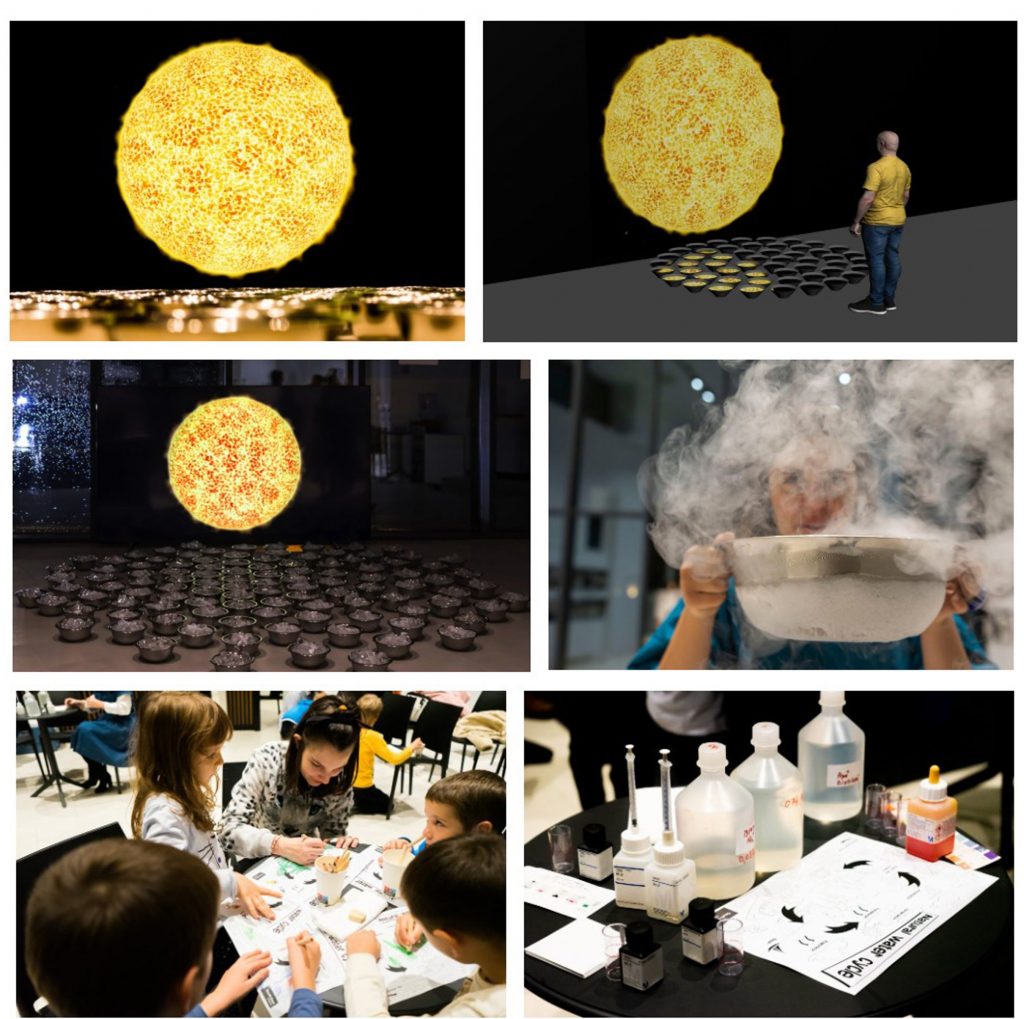
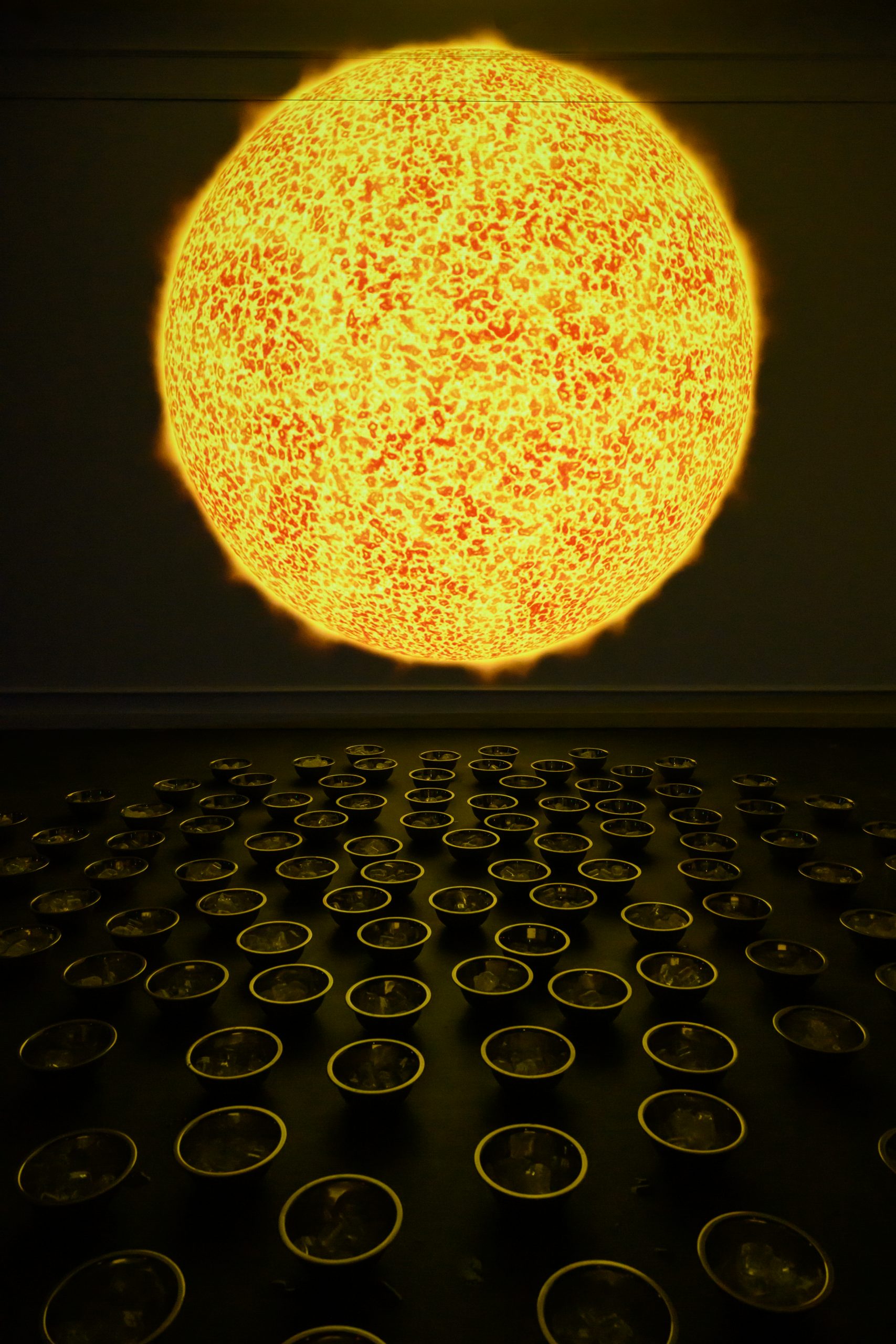
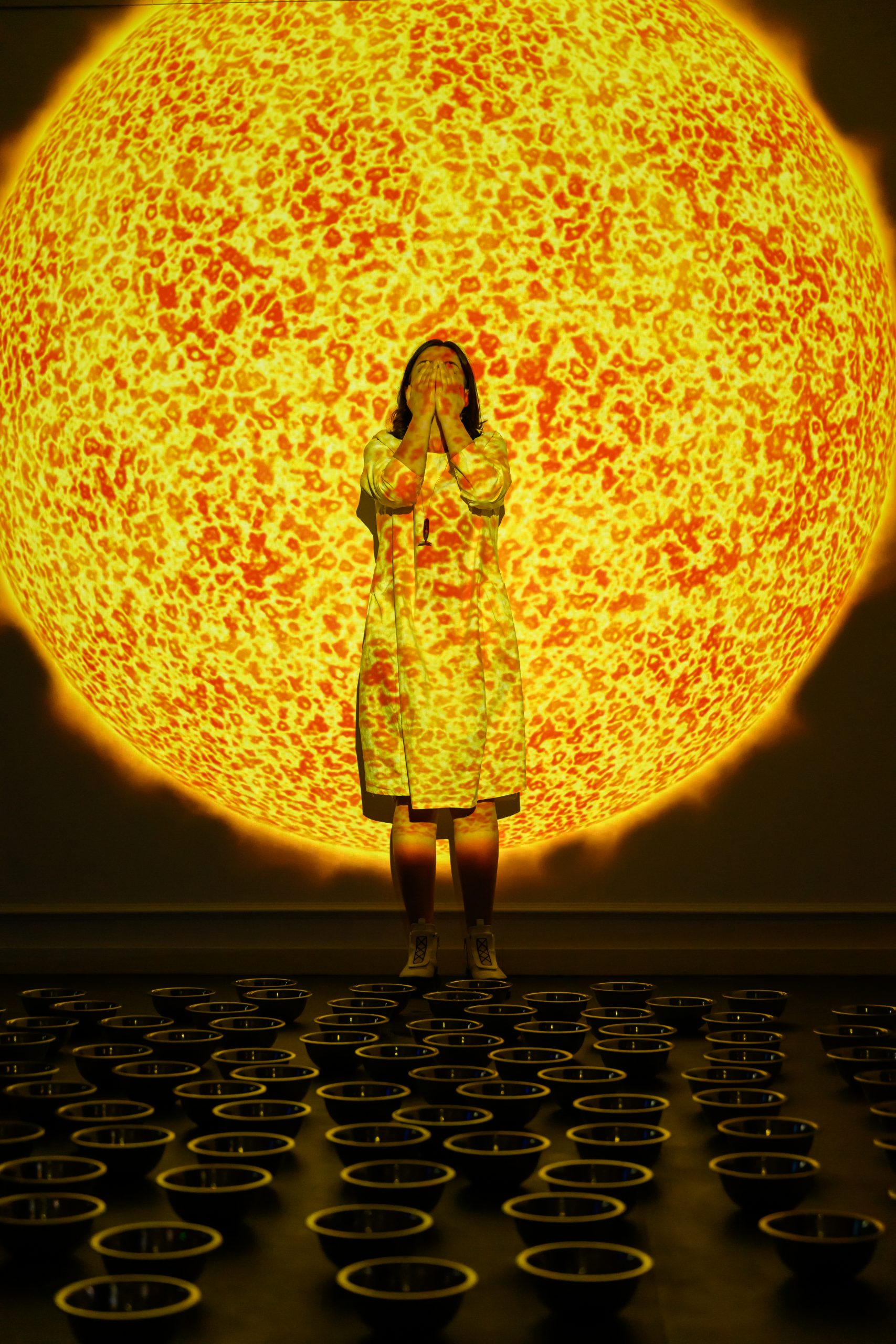
H₂O Transition constructs a perceptual environment in which water is encountered as a dynamic and relational system rather than a stable resource. Through light, reflection, and material containment, the installation stages the transformation of water across its multiple states—liquid, vapor, ice, and reflective surface—revealing hydrological processes as unstable and continuously shifting.

Within this environment, water operates as a material agent that mediates between body, perception, and planetary conditions. As visitors move through the space, reflections fragment, recombine, and drift, generating a fluid cartography of presence in which perception emerges through interaction with light and surface.

Extending beyond representation, the work situates hydrological instability within a broader ecological continuum. Water is not presented as an isolated element, but as part of interconnected processes linking atmospheric conditions, environmental change, and temporal transformation.

Participants become embedded within this shifting field, where sensing and being sensed unfold simultaneously. In this context, the installation proposes a negotiation between human presence and hydrological systems, reframing water as a co-present ecological agent through which fragility, transformation, and interdependence become perceptible.

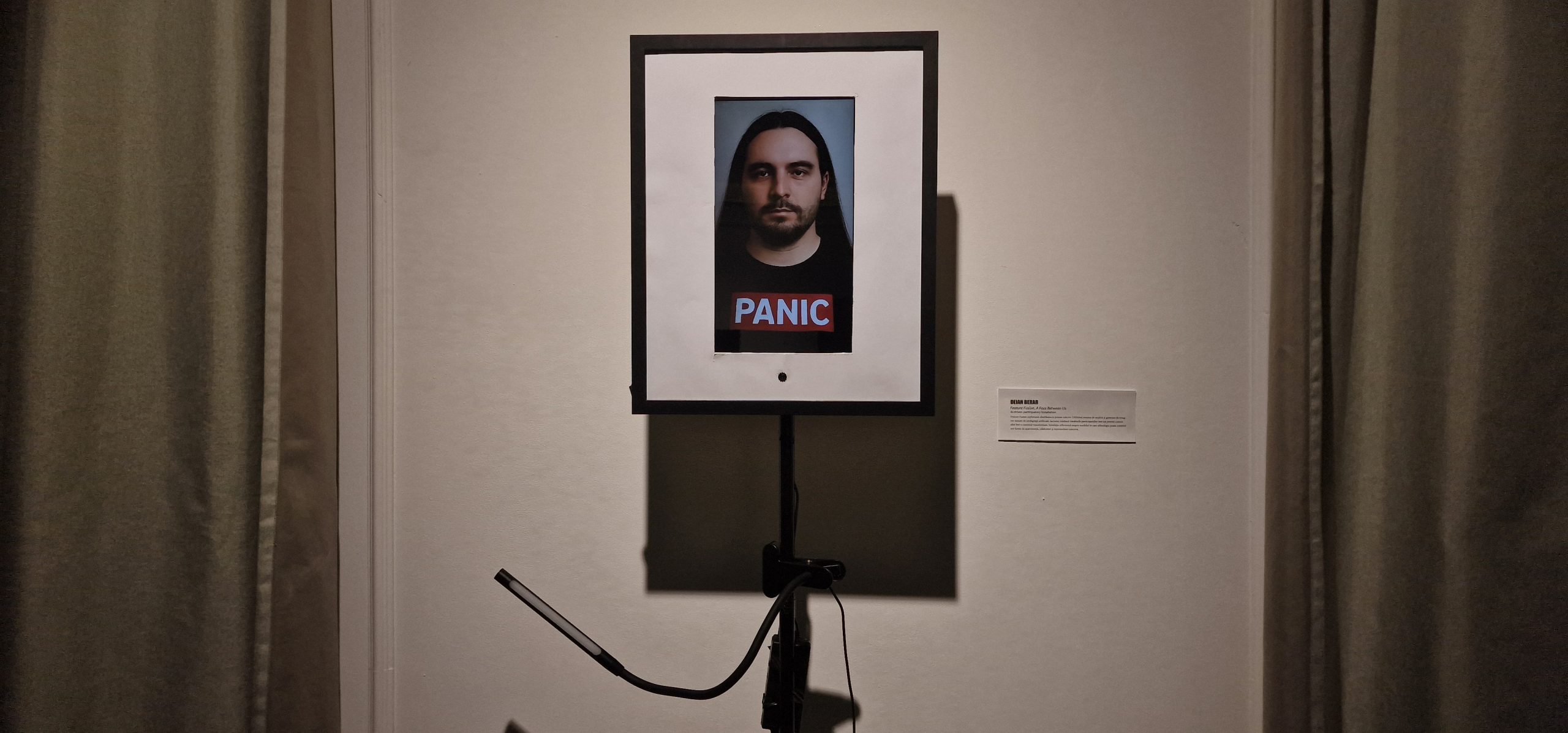
Artwork: Feature Fusion. A Face Between Us

Artist: Deian Berar

Technical description: AI-driven participatory installation

Dimensions: 200 x 200 x 200 cm

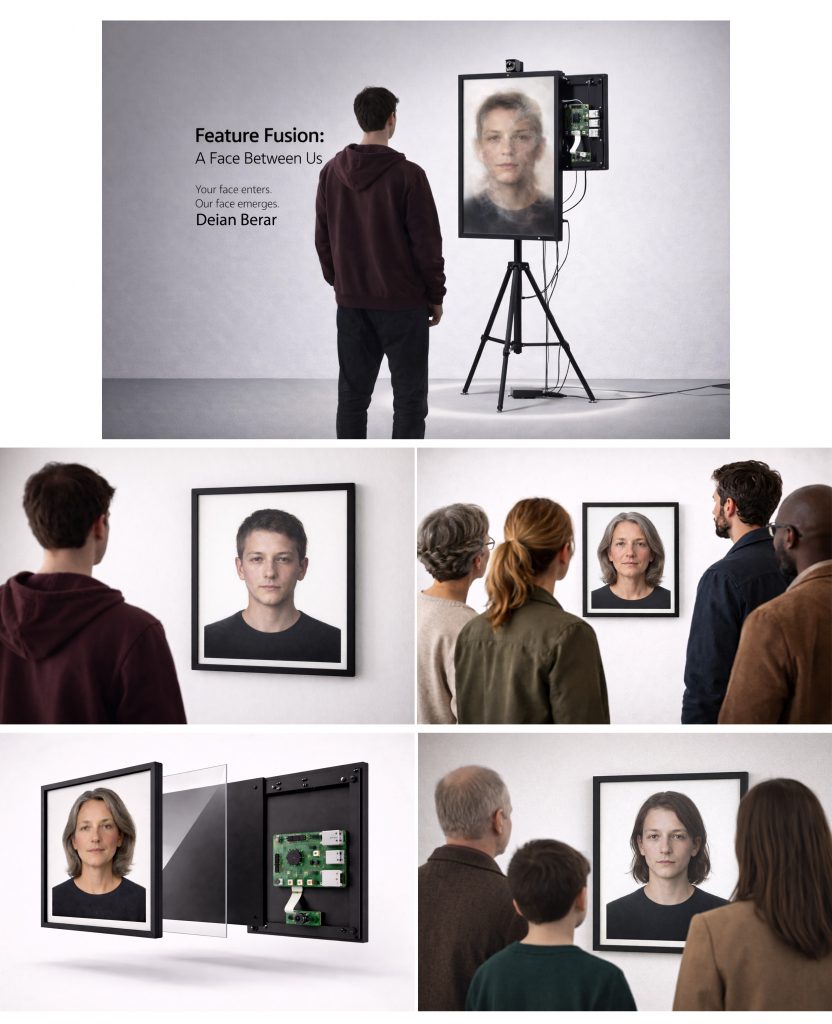
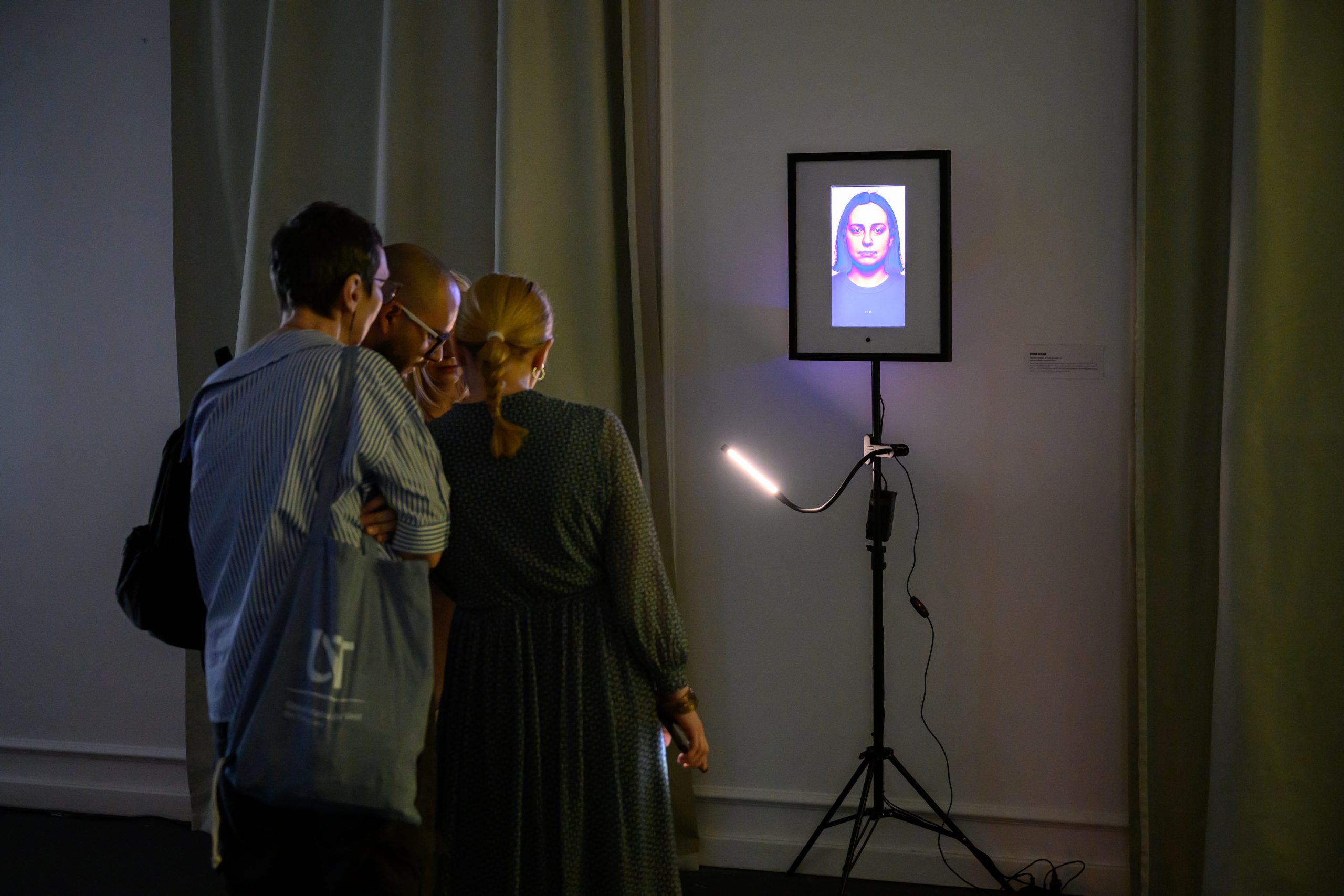
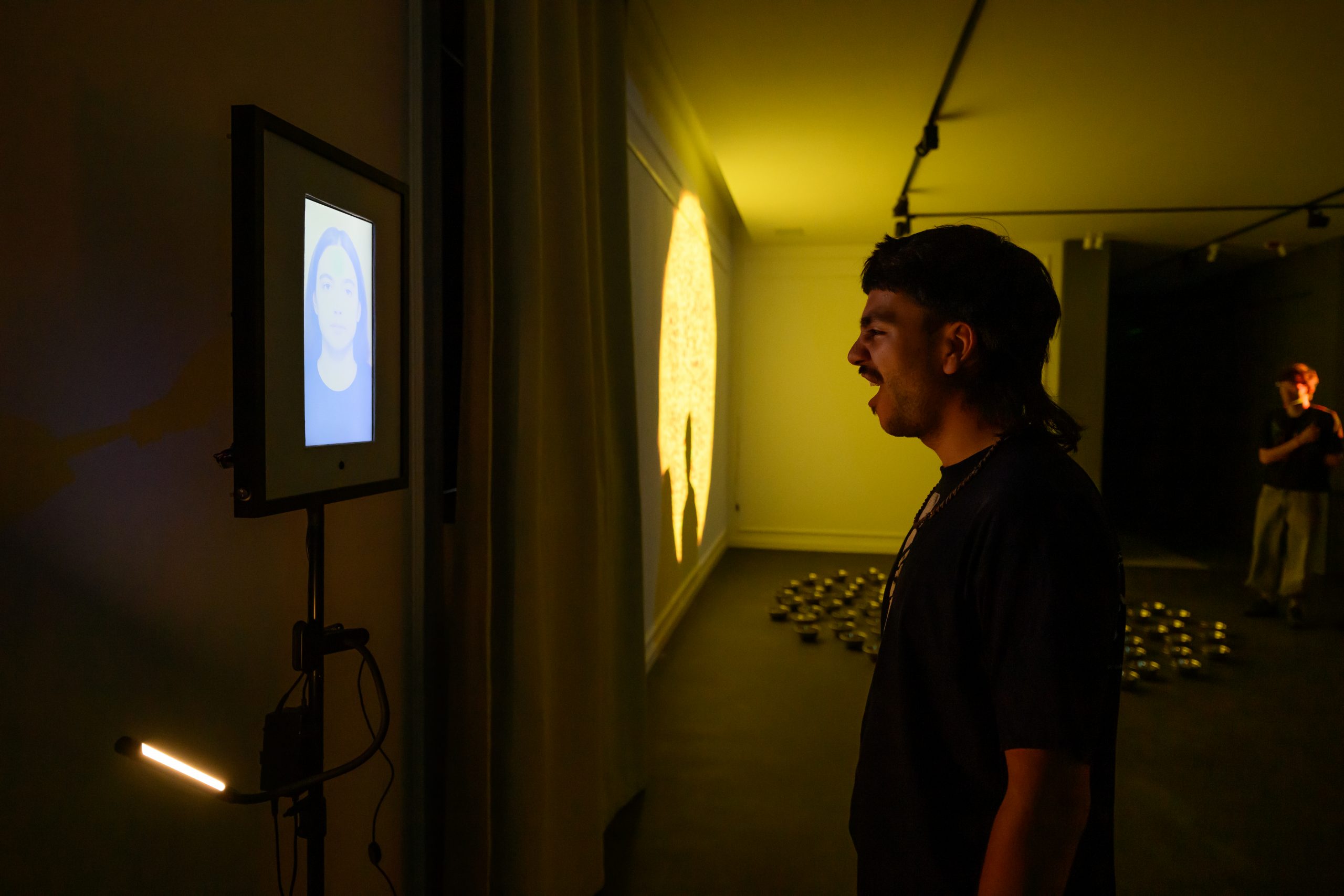
Feature Fusion constructs a responsive computational environment in which identity emerges as a dynamic and relational process. Through real-time image capture and AI-based synthesis, the installation generates an evolving collective portrait that continuously recombines the facial features of participants.

Within this system, visual data becomes a material agent—fluid, unstable, and shared. Rather than preserving individual identity, the algorithm dissolves and reconfigures it, producing a shifting composite that reflects the presence of multiple bodies across time.

The installation repositions machine vision from a tool of surveillance to a field of relational becoming. Identity is no longer fixed or owned, but negotiated through interaction between human presence and algorithmic processes.

Operating across scales, the work connects the immediacy of facial recognition with broader questions of collective existence and shared futures. Participants encounter themselves not as isolated individuals, but as part of an emergent system in which boundaries between self and other, human and machine, become increasingly permeable.

In this evolving feedback loop, humanity appears as a continuously recomposed condition—formed through data, interaction, and the co-presence of others.

ArtworkBreathing Fields

Artist: Vlad Jelmărean

Technical description: Breath-driven cymatic laser projection

Dimensions: 300 x 400 x 300 cm

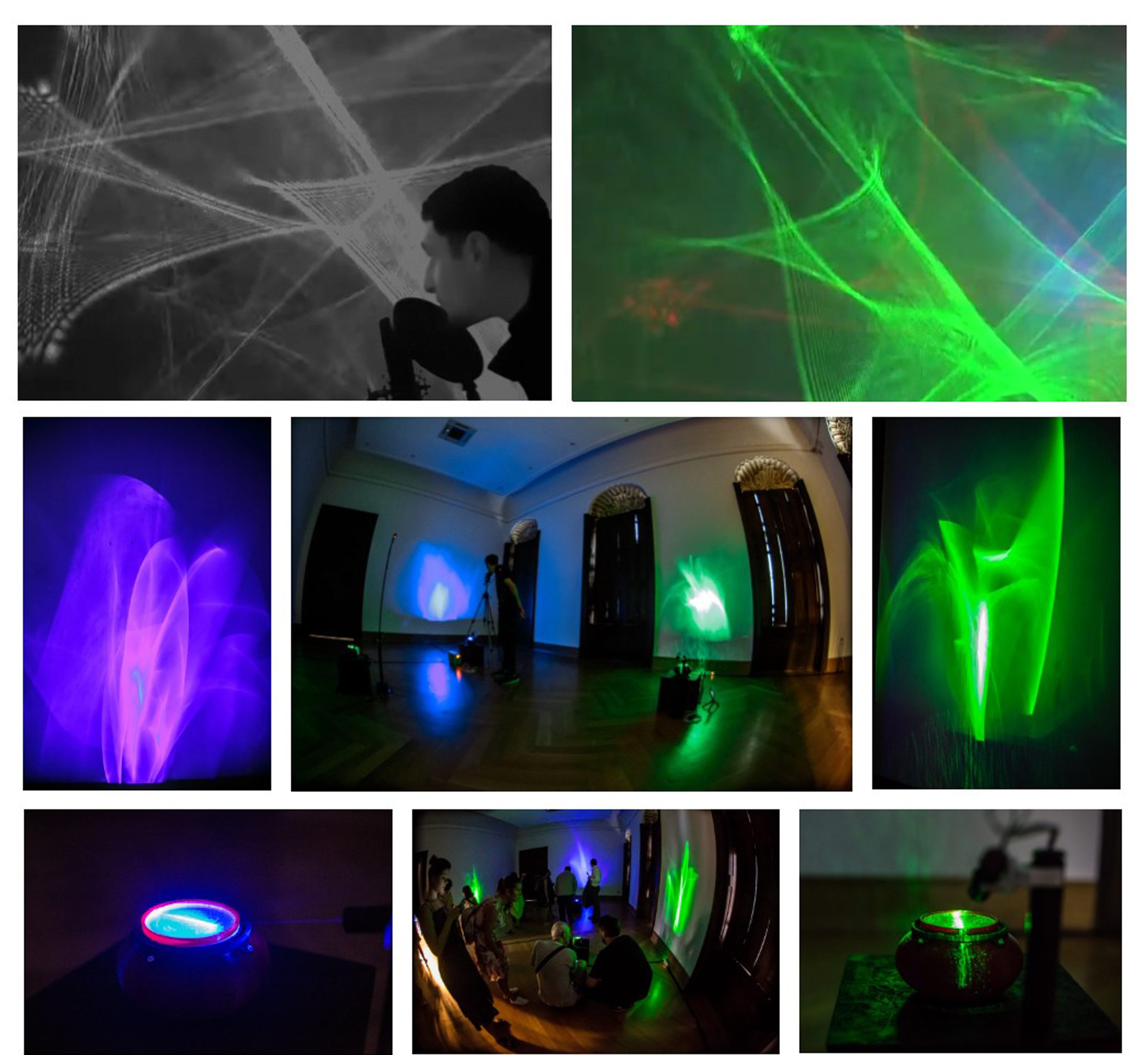
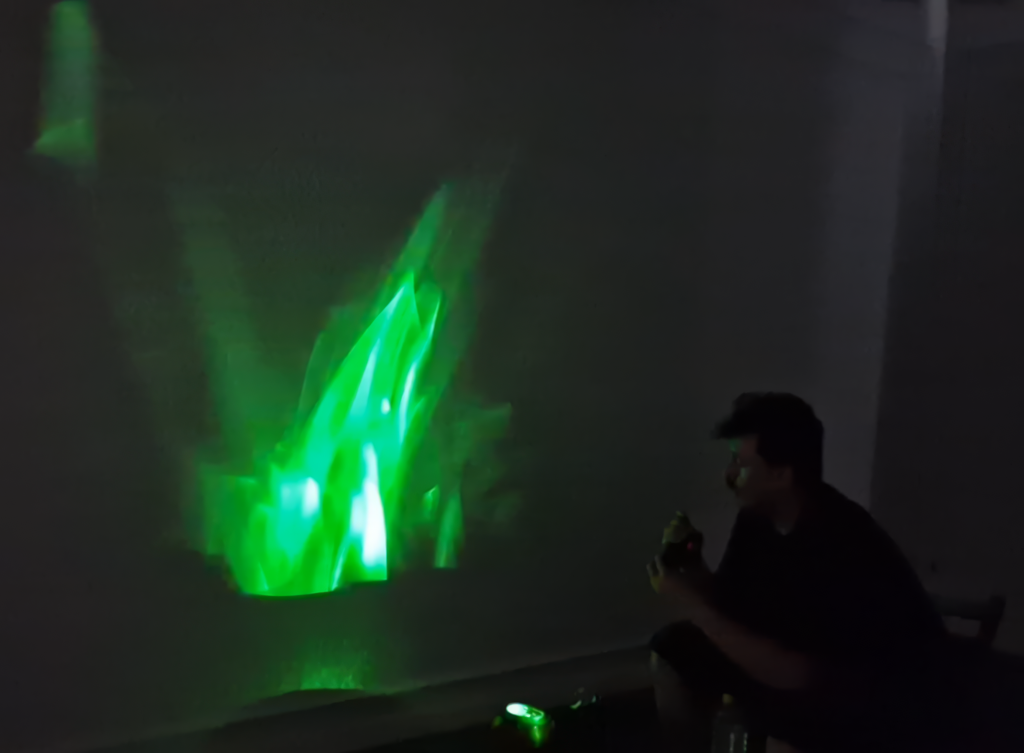
Breathing Fields constructs an atmospheric environment in which respiration becomes a spatial and perceptual force. Using sensors, haze, and cymatic laser projections, the installation translates breath and voice into dynamic formations of light that expand, contract, and dissolve in real time.

Within this system, breath operates as a material agent that connects individual bodies to shared atmospheric conditions. Each exhalation generates temporary spatial configurations, transforming air into a responsive medium that records and amplifies presence.

The installation reveals respiration as a multi-scalar process—linking intimate bodily rhythms with broader atmospheric dynamics. Breath becomes both a biological function and an ecological interface, situating the body within a continuum of air, environment, and collective presence.

Participants enter a feedback system in which sensing and emission are inseparable. In this context, the work stages a negotiation between individual expression and shared environment, reframing breathing as a form of ecological inscription.

Through this process, the installation positions atmosphere as a living field in which bodies do not simply exist, but continuously co-create spatial and perceptual conditions.

Artwork: Inverted Panopticon

Artist: Miki Velciov

Technical description: Optical Installation

Dimensions: 700 x 375 x 280 cm

Panopticon draws on the architectural model of surveillance formulated by Jeremy Bentham in the late eighteenth century and influenced later prison architecture, including in the United States. Within this structure, a guard positioned at a central point can observe cells arranged radially across multiple levels and within a 360-degree field of vision, without being seen.

By separating the person who sees from those who are seen, the system anticipates the modern imaginary of “Big Brother” surveillance: control depends not only on continuous observation, but also on the permanent possibility of being watched.

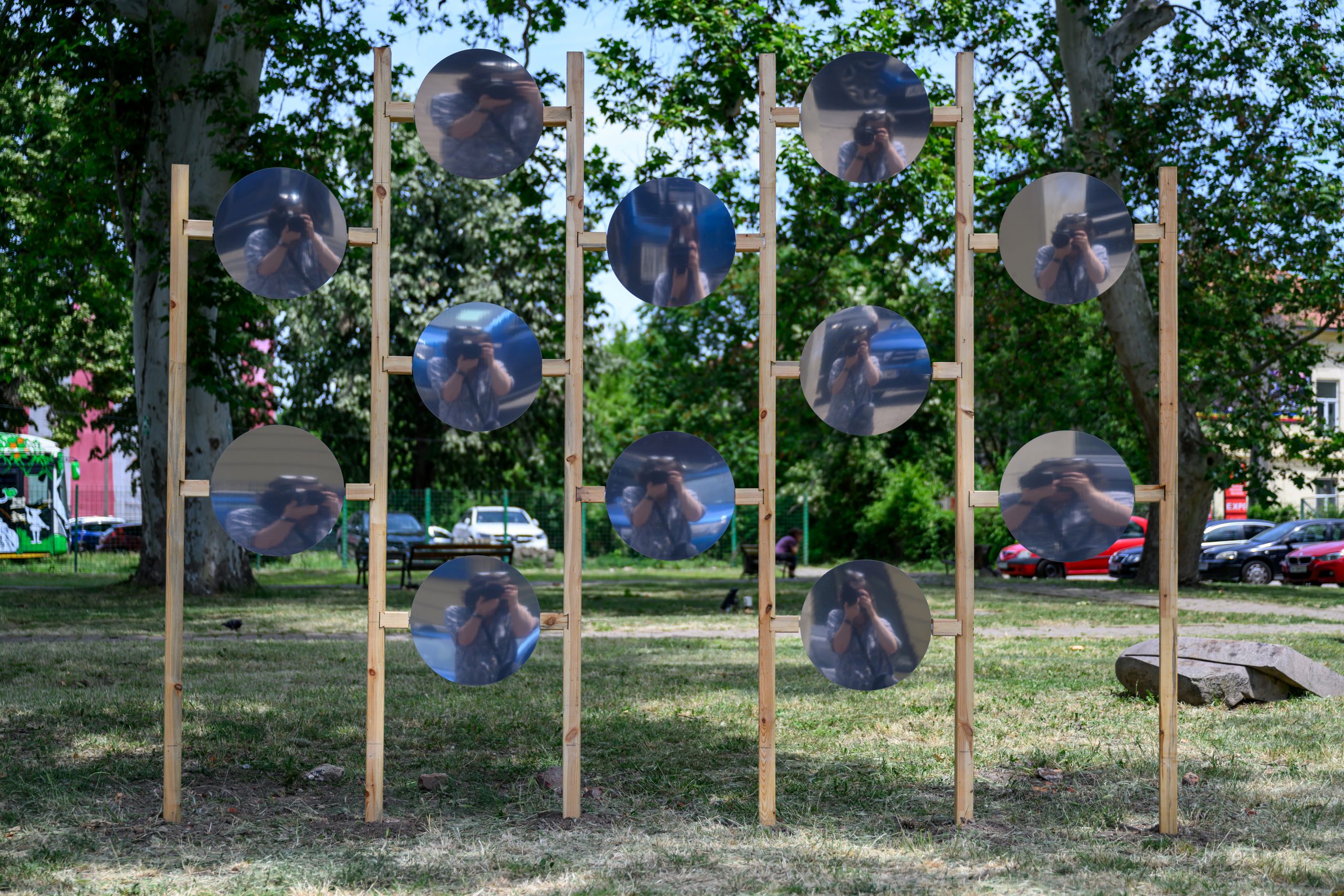
Miki Velciov reverses this mechanism. In his installation, the viewer occupies the guard’s privileged position but can no longer remain invisible. The mirrors are directed towards the viewer’s point of perception and multiply their image, so that the person who observes simultaneously becomes the observed.

The installation’s placement in nature introduces a second transformation. The mirrors reflect the vegetation, sky, and light, visually integrating and partially camouflaging the structure within its surroundings. A device associated with surveillance and control thus becomes an interface between body, image, and landscape.

The prefix “pan-” means “all” and evokes the idea of total visibility. At the same time, it opens up a poetic association with Pan, the god of wild nature. Through this double reading, the gaze no longer belongs to a central authority but circulates between the human being, the artwork, and the natural environment. Nature is no longer merely the background of the installation, but an active presence that absorbs, fragments, and reflects the viewer’s image.

Artwork: Constellating Intuition

Artist: 13m10j (Marius Jurca)

Technical description: Interactive gesture-based system

Dimensions: 300 x 350 x 300 cm

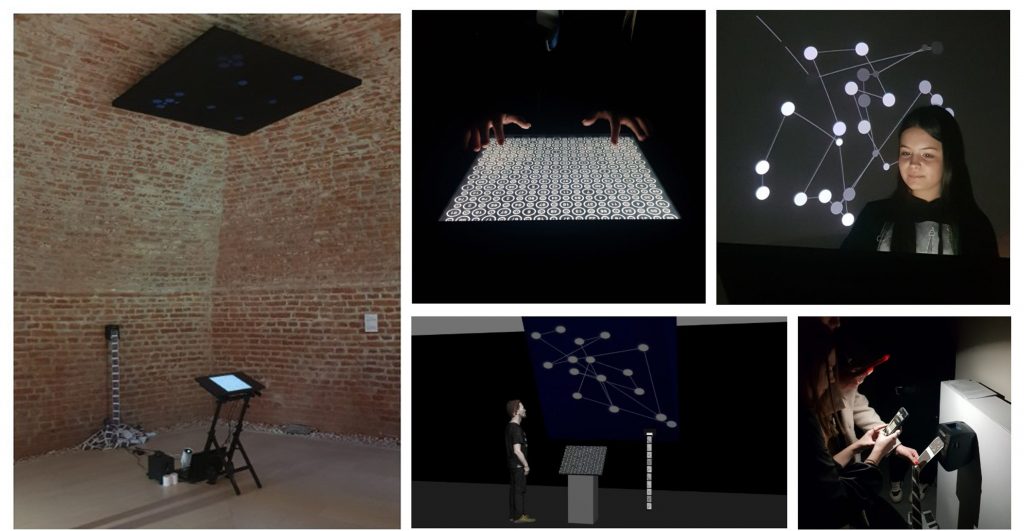
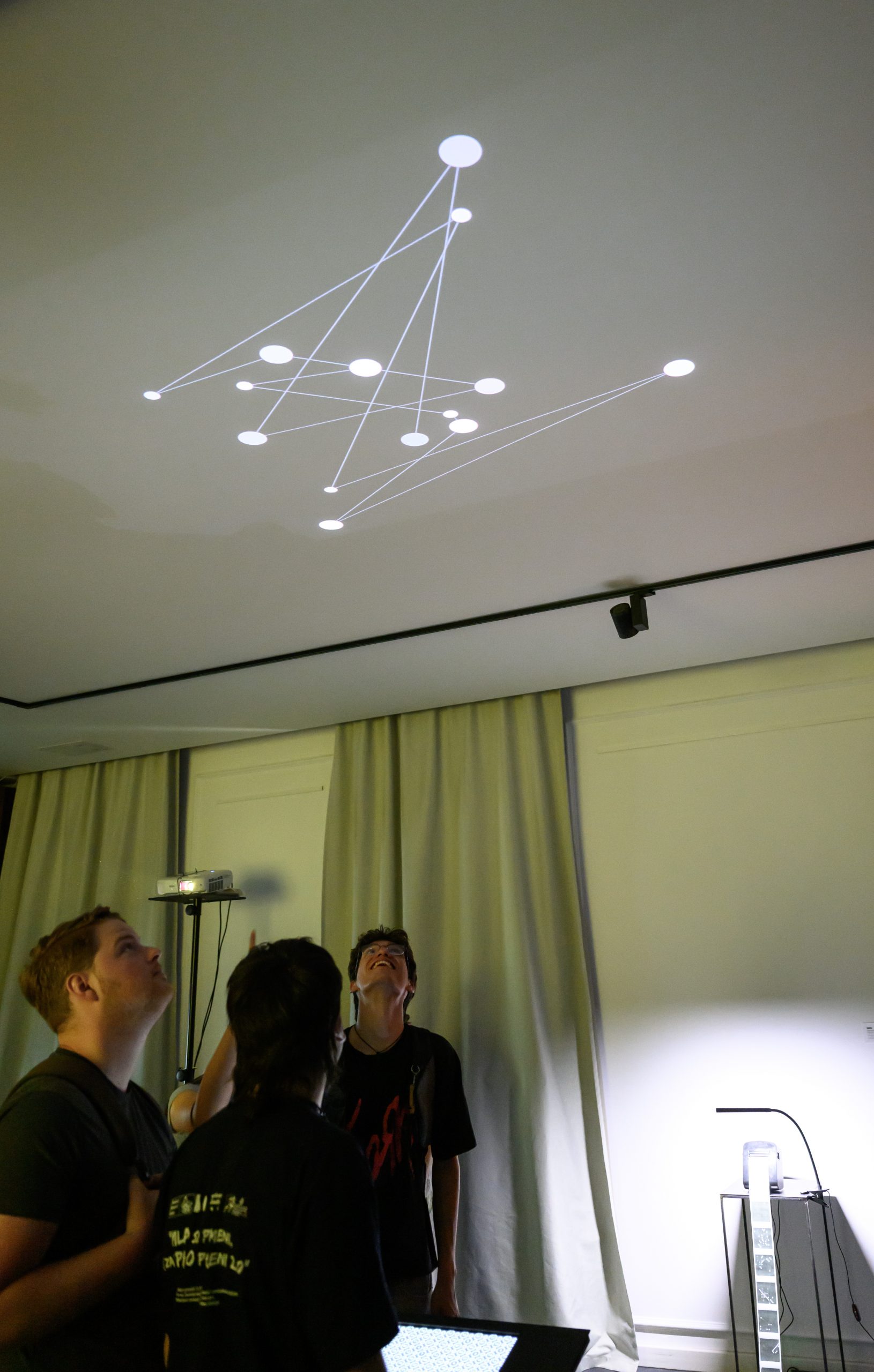
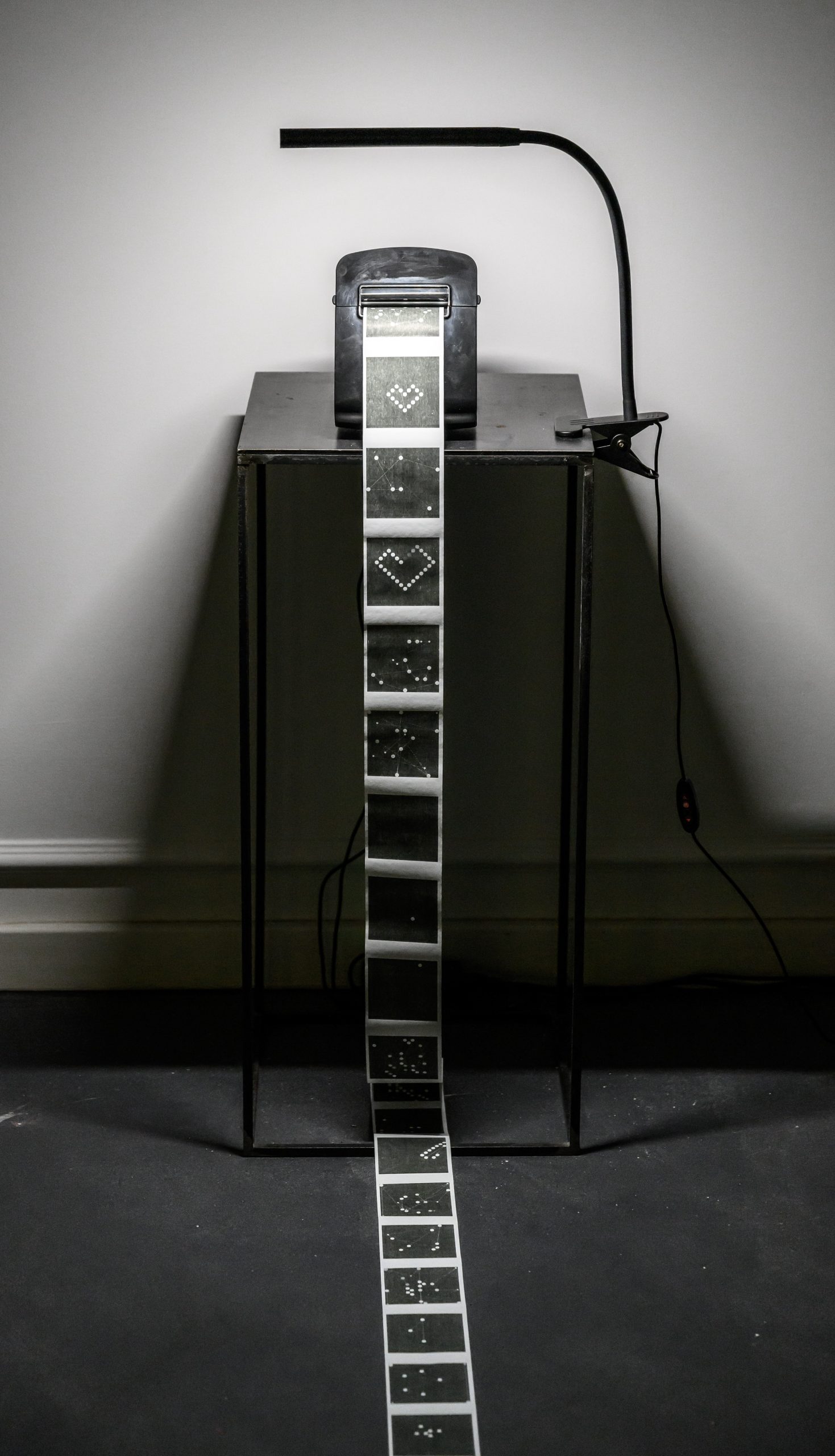
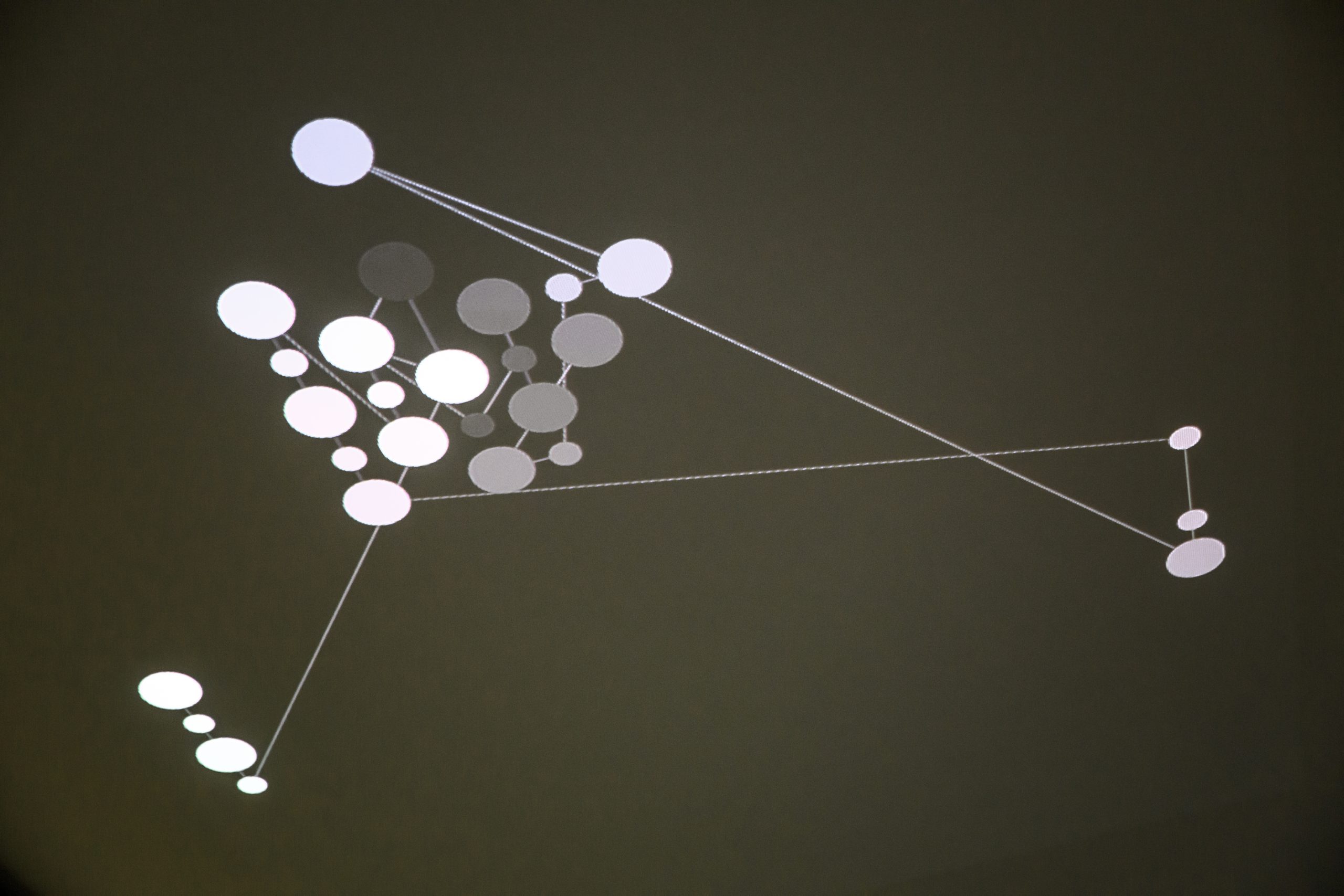
Constellating Intuition constructs an interactive system in which gesture becomes a generative interface between body, space, and abstract structure. Through real-time tracking, subtle hand movements are translated into dynamic constellations of light that cluster, disperse, and reorganize into ephemeral configurations.

Within this environment, gesture operates as a material agent that produces form through movement. The installation transforms intuition from an internal cognitive process into an externalized, spatial phenomenon—emerging relationally through interaction with the system.

The resulting constellations evoke both mnemonic diagrams and cosmic structures, linking embodied action with broader patterns of organization and emergence. Rather than representing the cosmos, the work activates a shared field in which micro-gestures resonate with macro-structures.

Each configuration is both transient and recordable, allowing fleeting moments of perception to leave traces. In this process, the installation stages a negotiation between control and emergence, intention and system behavior.

Participants engage with a dynamic environment in which knowledge is not predefined, but generated through interaction—positioning intuition as a relational process unfolding across body, system, and space.

Tue ‒ Thu: 05pm ‒ 07pm

Splaiul Peneș Curcanul nr. 4-5, clădirea Azur, etaj 1, studio 29, Timișoara