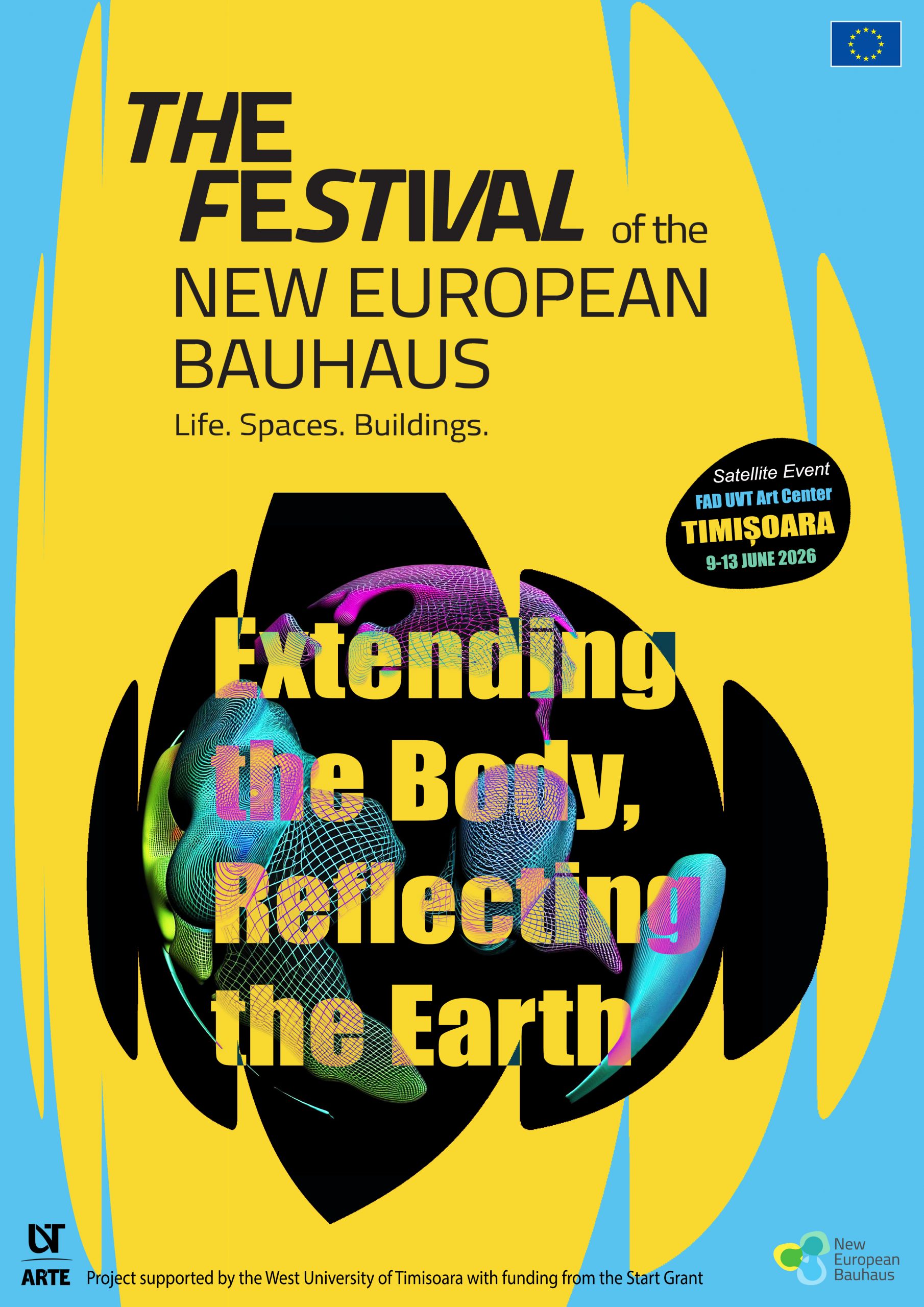
Extending the Body, Reflecting the Earth as a Techno-Ecological Constellation
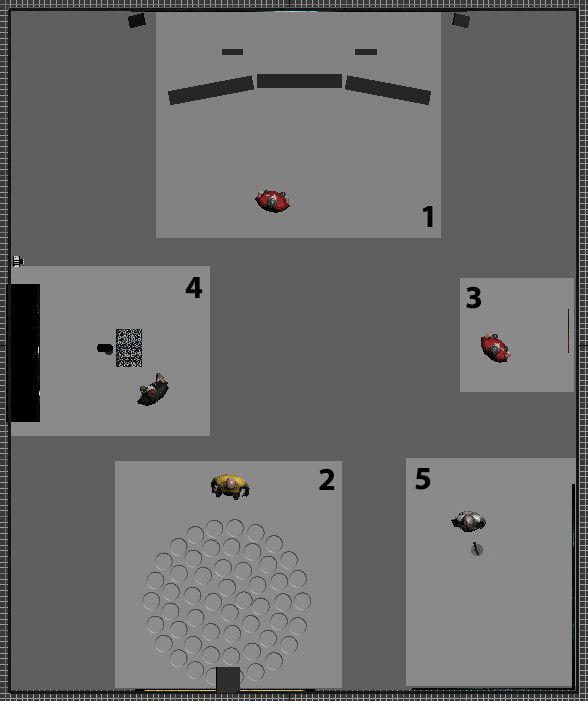
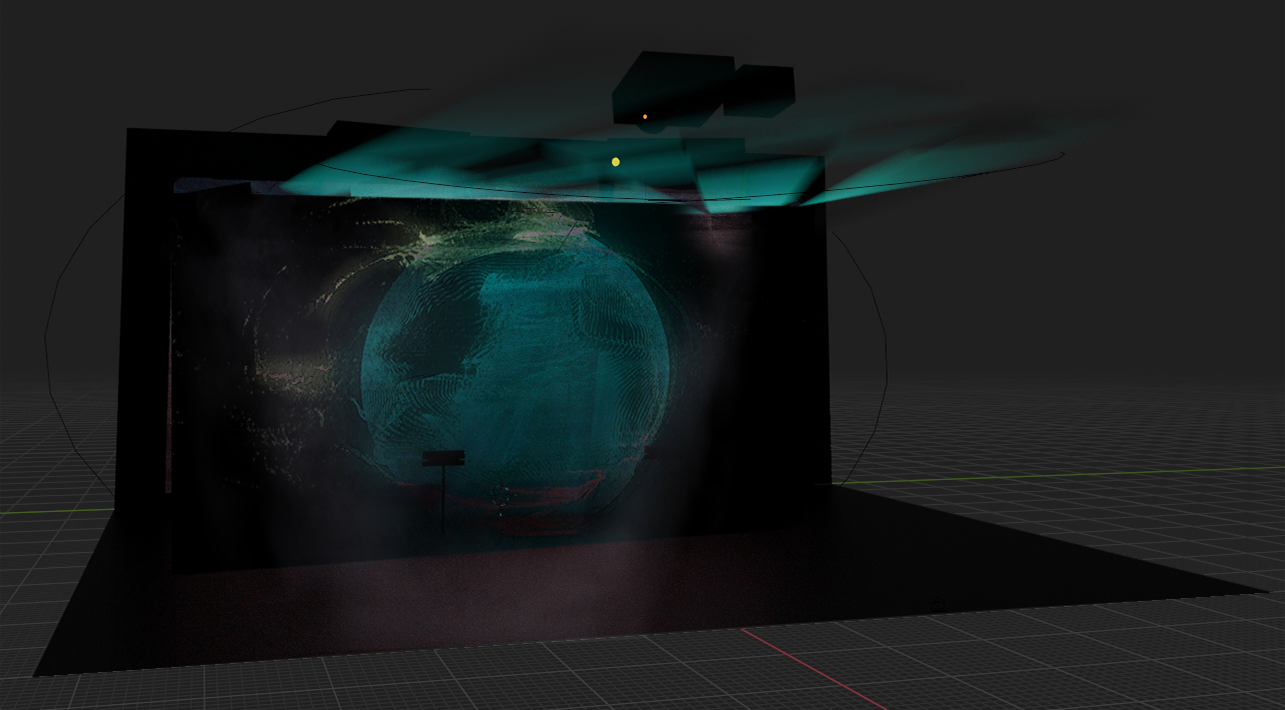
The project Extending the Body / Reflecting the Earth is examined here as a case study that exemplifies the transition from system-based media art toward techno-ecological environments. Rather than functioning as a conventional exhibition, the project operates as a distributed perceptual system, structured as a constellation of interconnected installations in which bodies, technologies, and environmental processes co-produce experience.
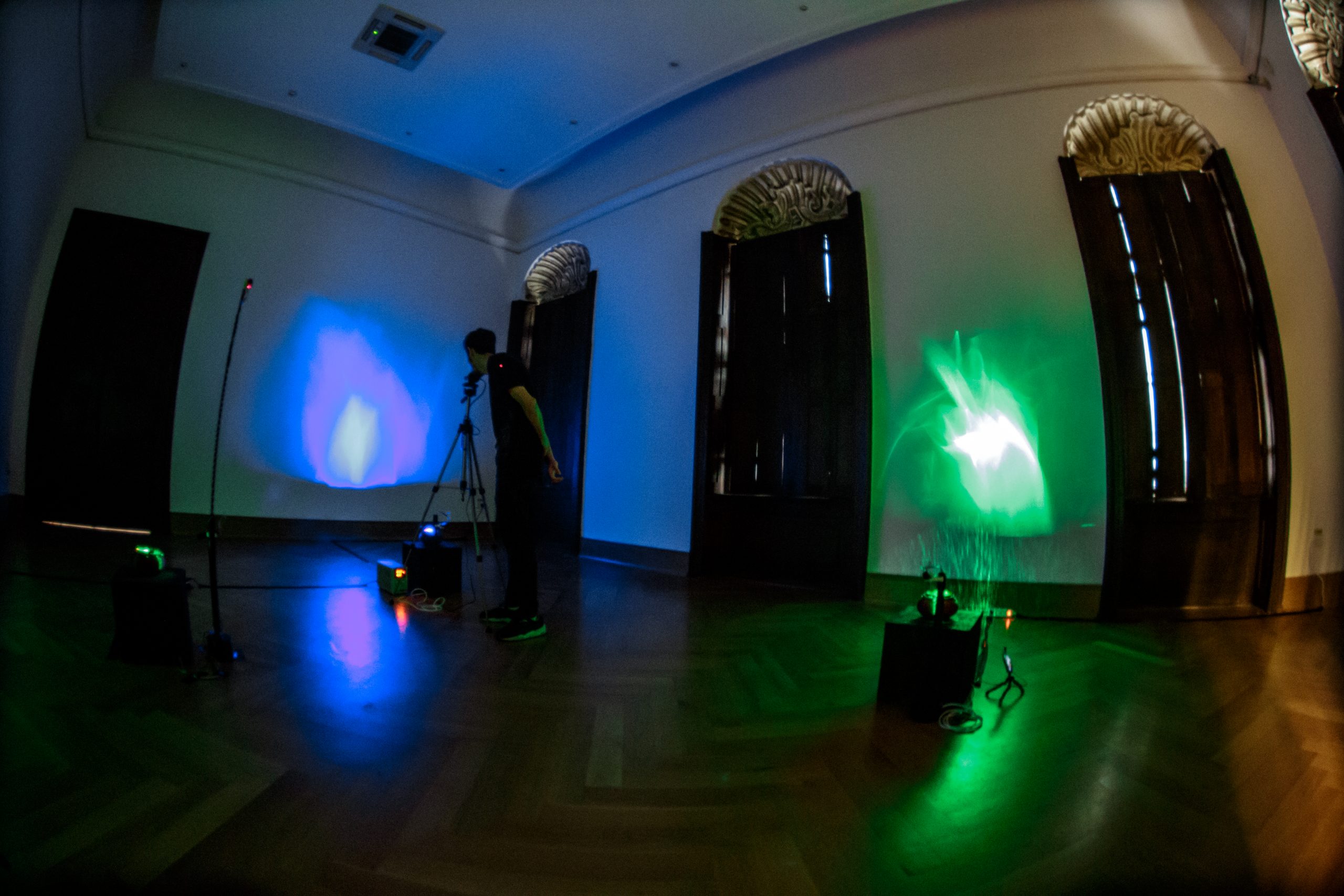
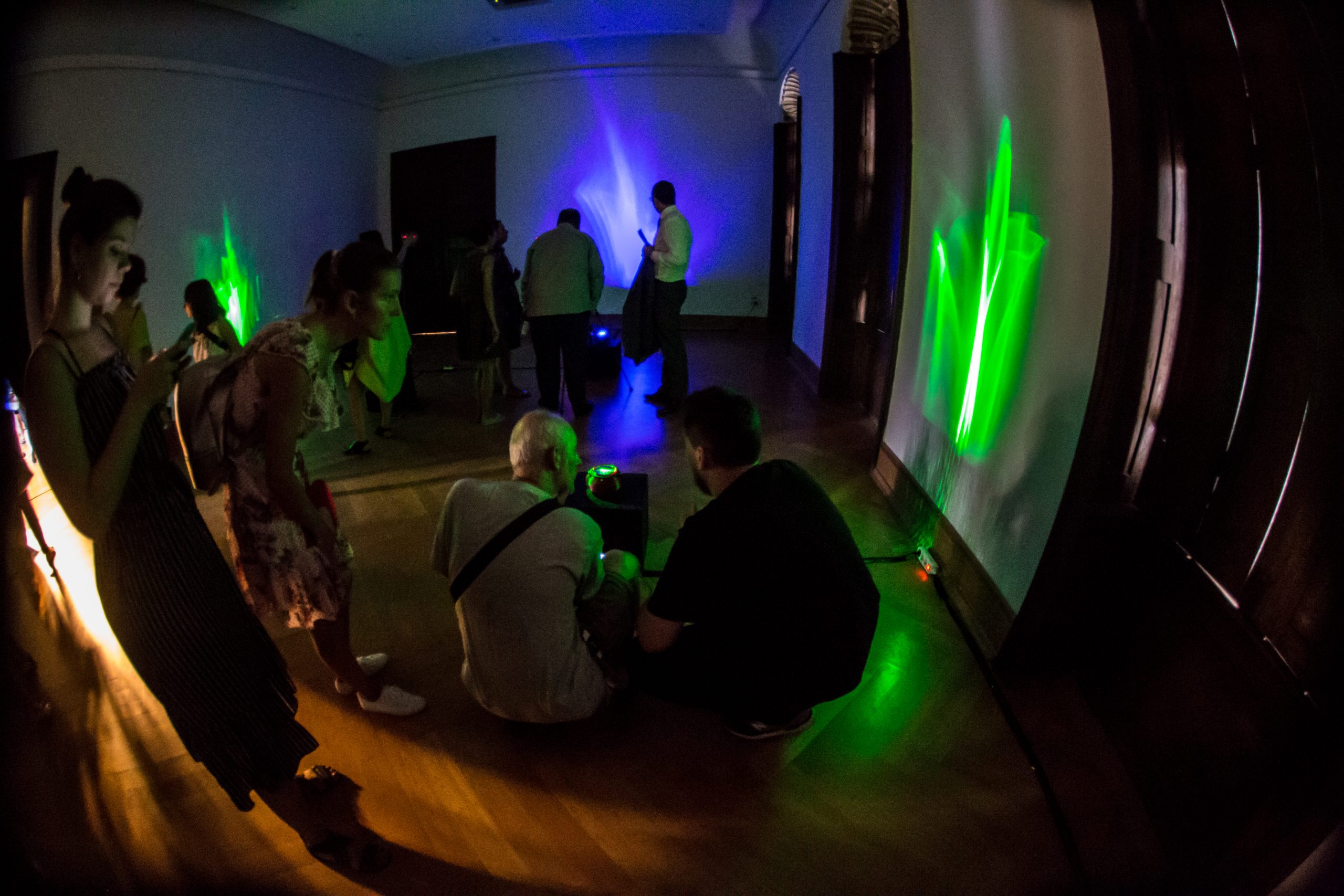
Conceived as a “living constellation,” the project articulates a spatial and conceptual framework in which each artwork functions as an ecological node within a shared field of sensing and interaction. This configuration transforms the exhibition space into an experiential ecosystem, where perception emerges not from isolated encounters with individual works, but through the dynamic relations established between them.
In contrast to representational approaches to ecological themes, the installations do not depict environmental or planetary phenomena. Instead, they construct responsive environments in which such processes are enacted and directly experienced. Participants are not positioned as external observers but become embedded within feedback systems where sensing and being sensed unfold simultaneously.
Within this framework, the project can be analyzed through four operational dimensions that correspond to the techno-ecological paradigm outlined earlier.
4.1 Atmospheric Systems: Perception as Environmental Condition
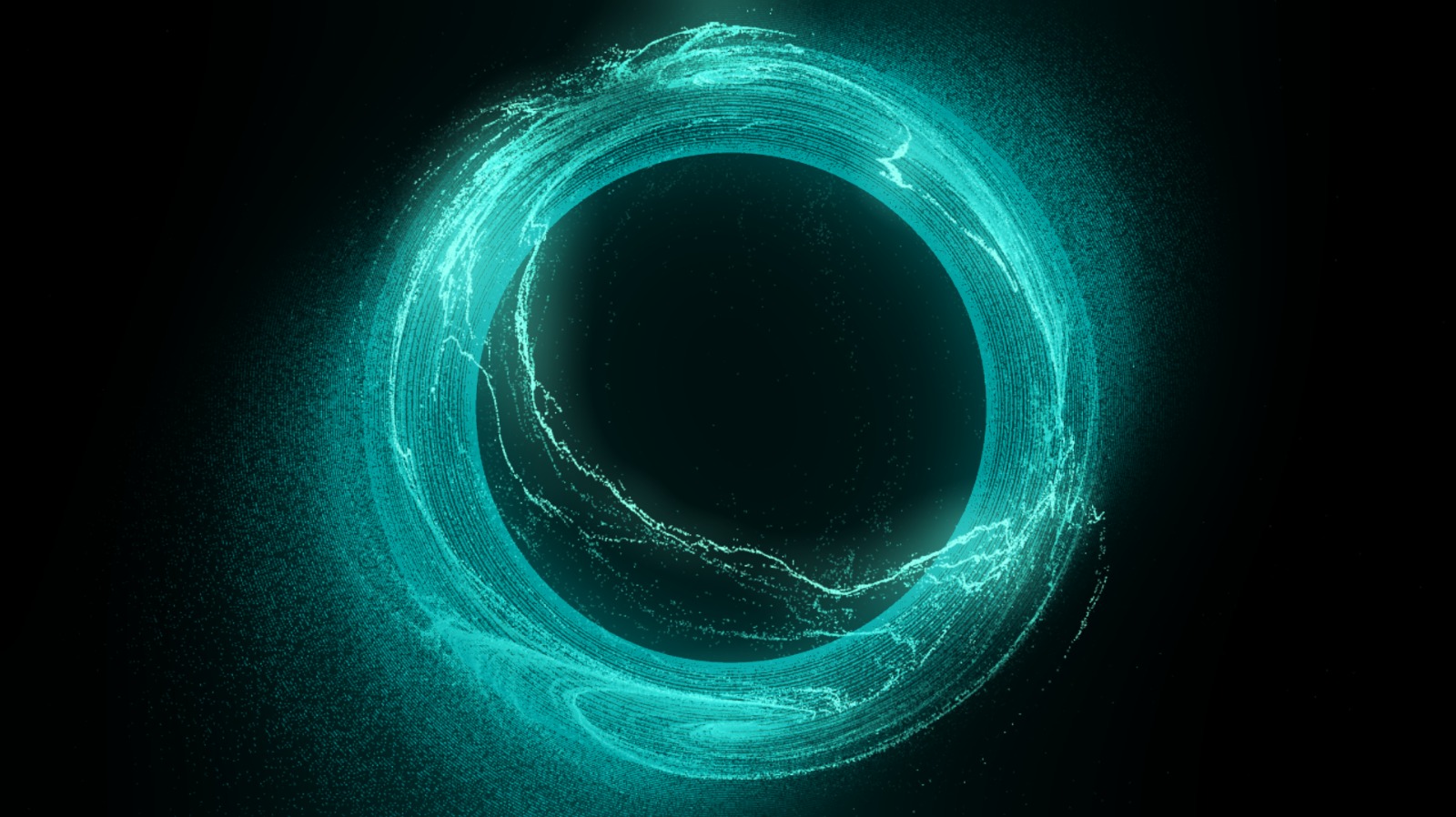
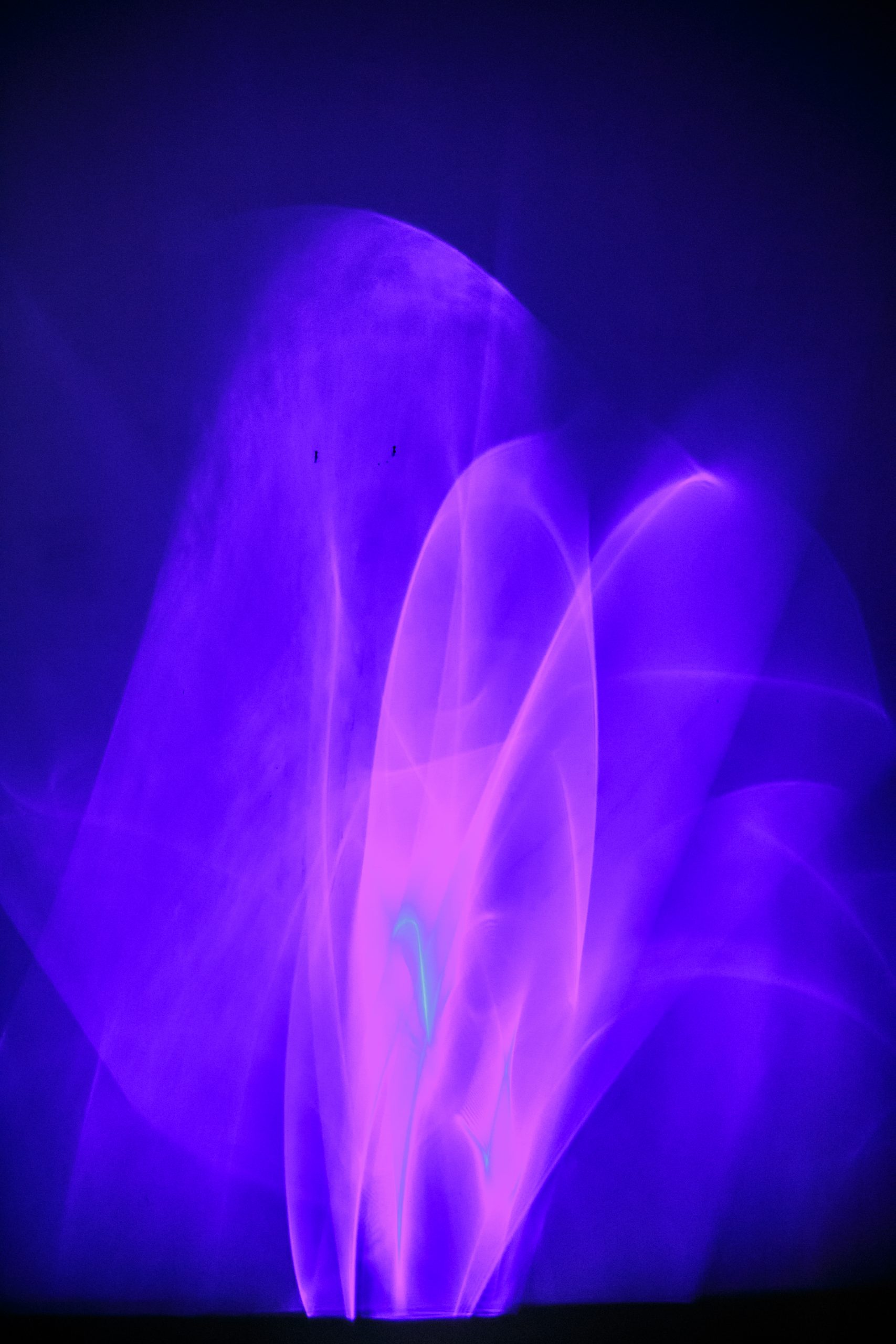
Installations such as Desert Storm and Breathing Fields foreground the transformation of atmosphere into an active perceptual medium. Through haze, light, sound, and sensor-driven interaction, air becomes a dynamic interface that registers and responds to bodily presence.
In these works, atmosphere is no longer a neutral container of experience but a material agent that mediates between body and environment. The use of particulate matter, turbulence, and breath-based interaction introduces a multi-scalar dimension in which micro-level bodily processes resonate with larger environmental and planetary dynamics.
This approach reflects a shift from interface-based interaction toward environmental immersion, where perception is distributed across spatial conditions rather than localized at a specific point of contact. The participant does not interact with the system but exists within it.
4.2 Hydrological and Material Transformations: Instability as Knowledge
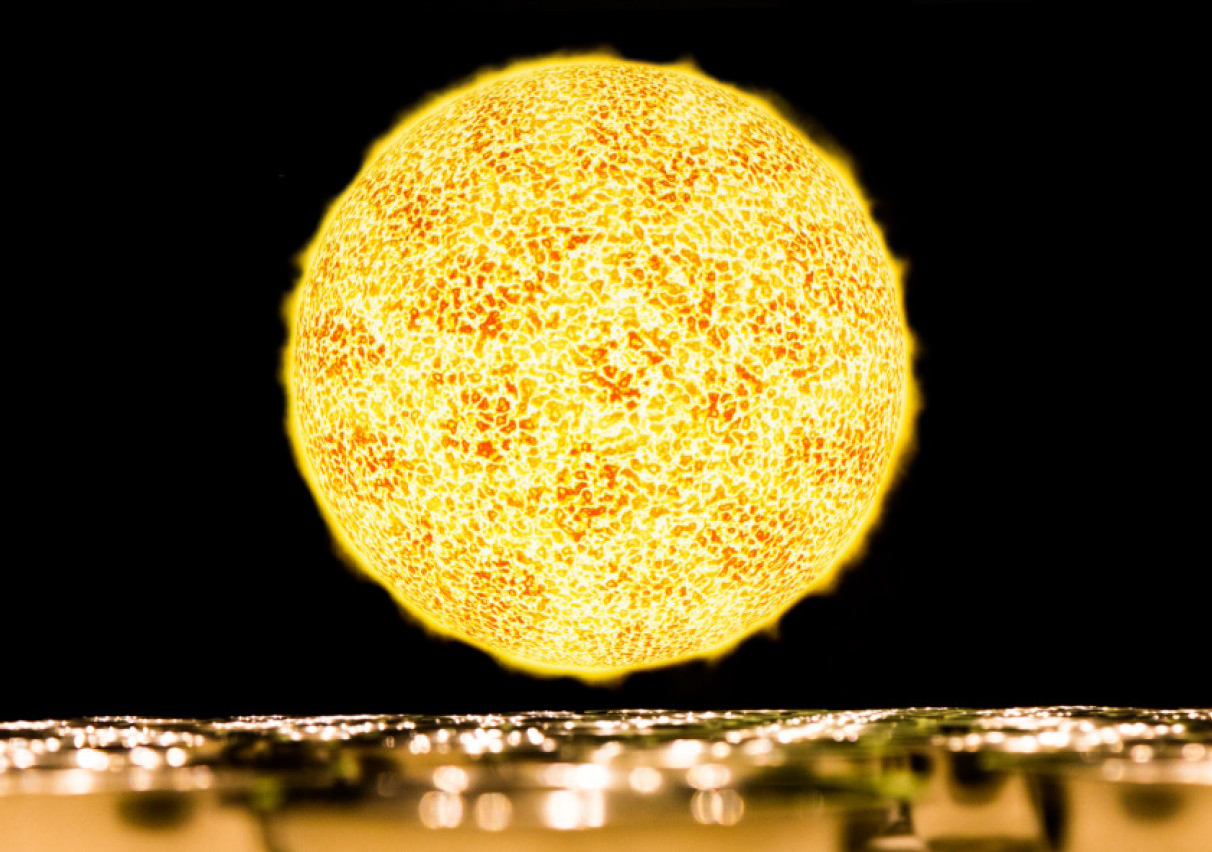
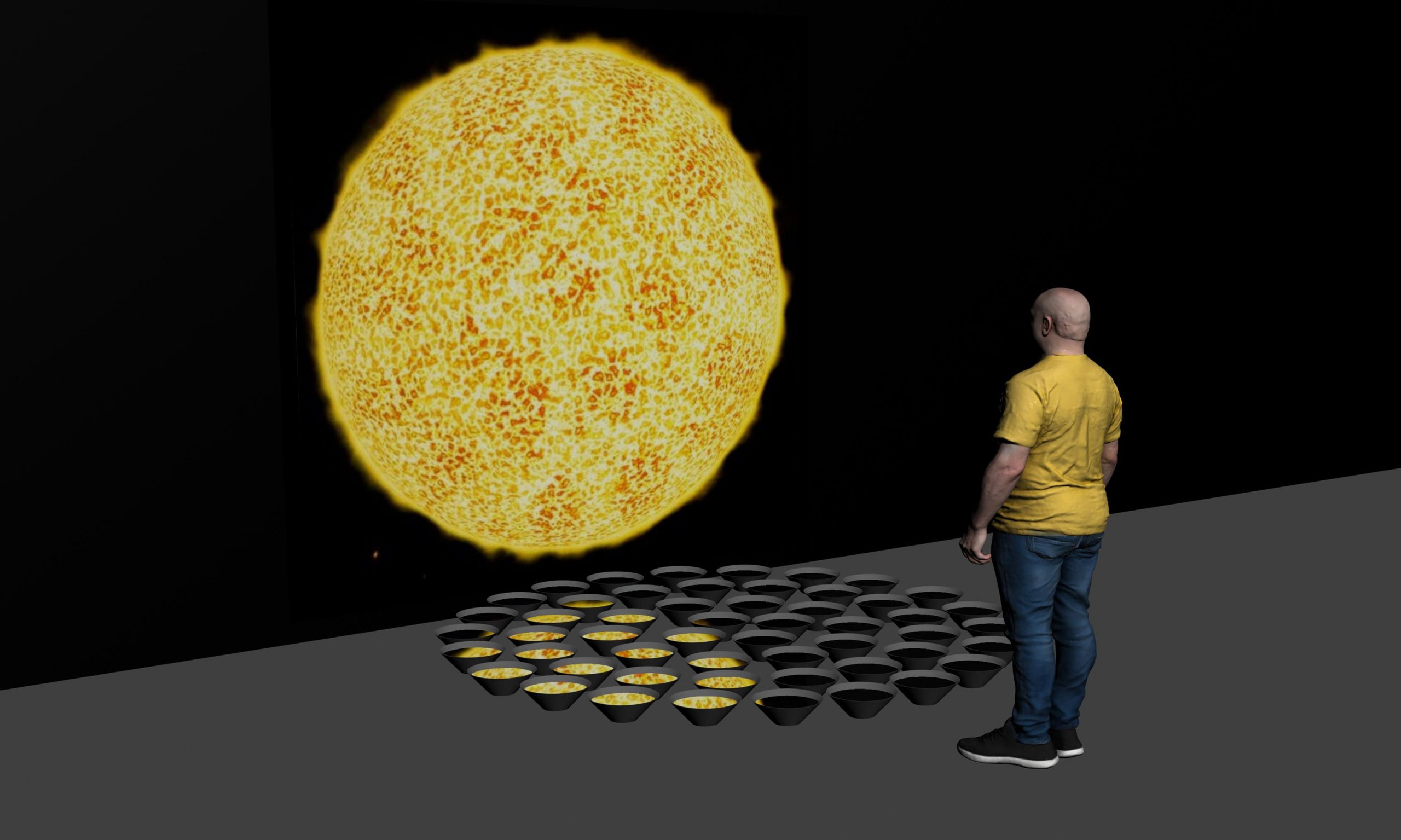
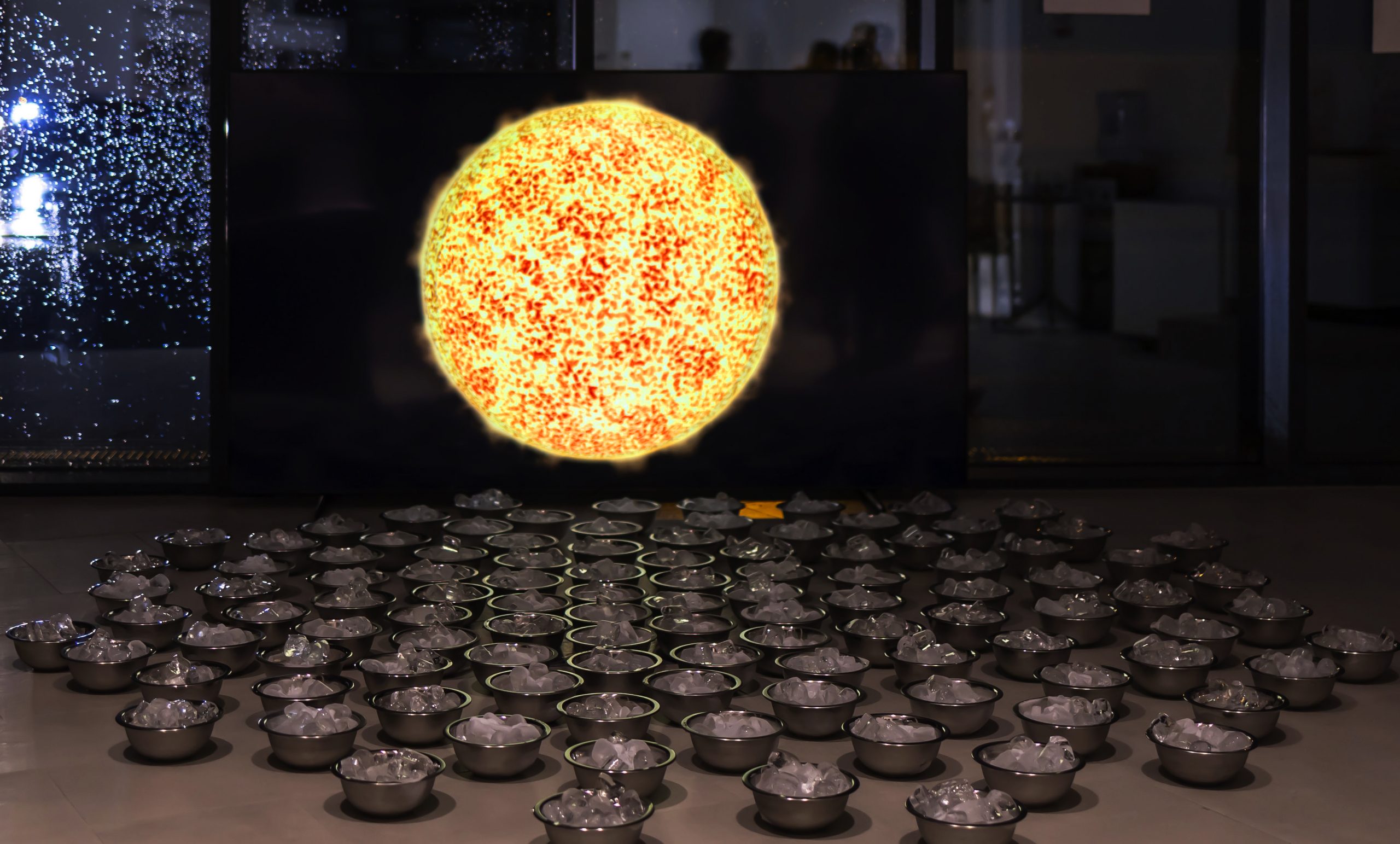
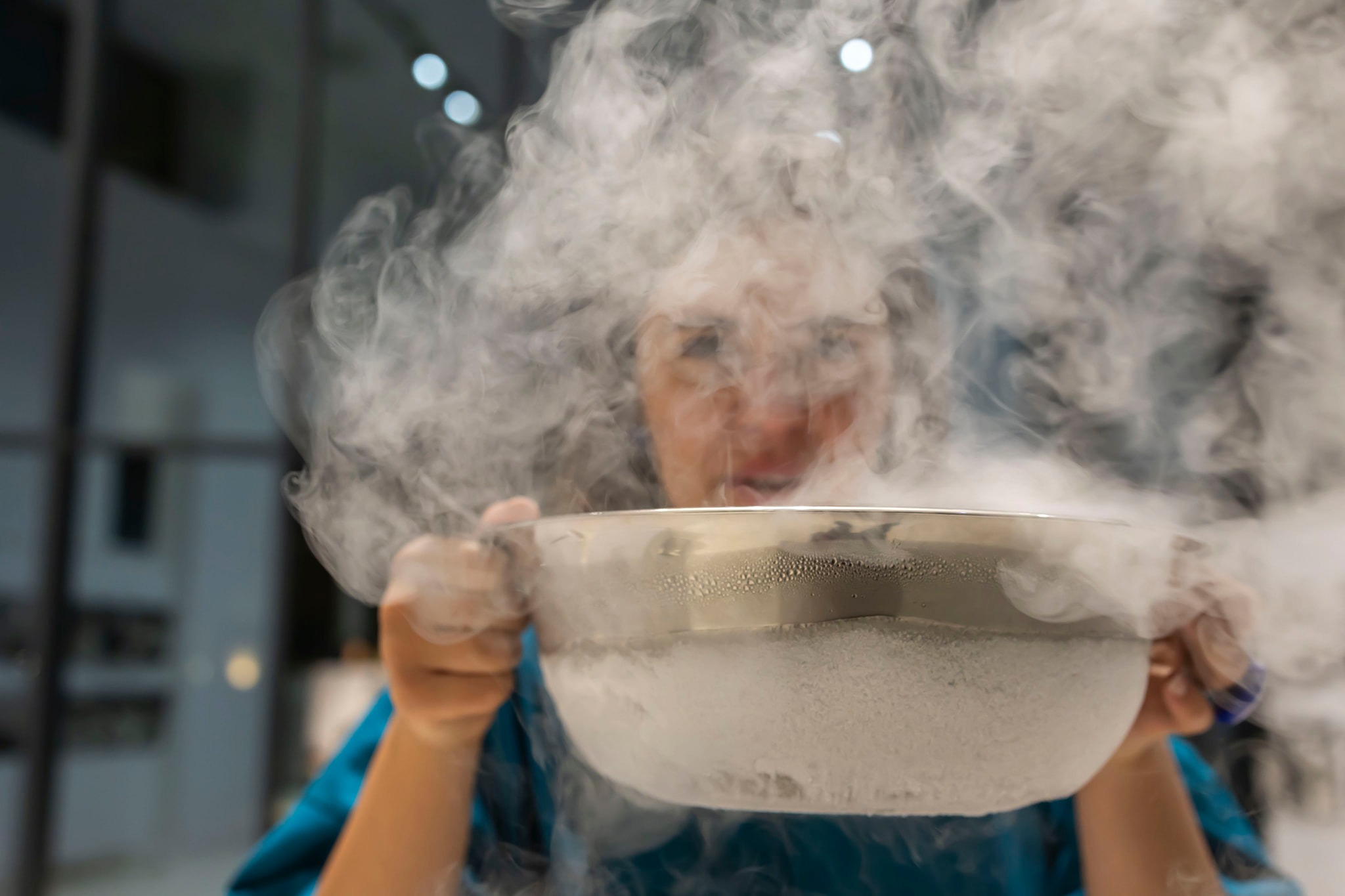
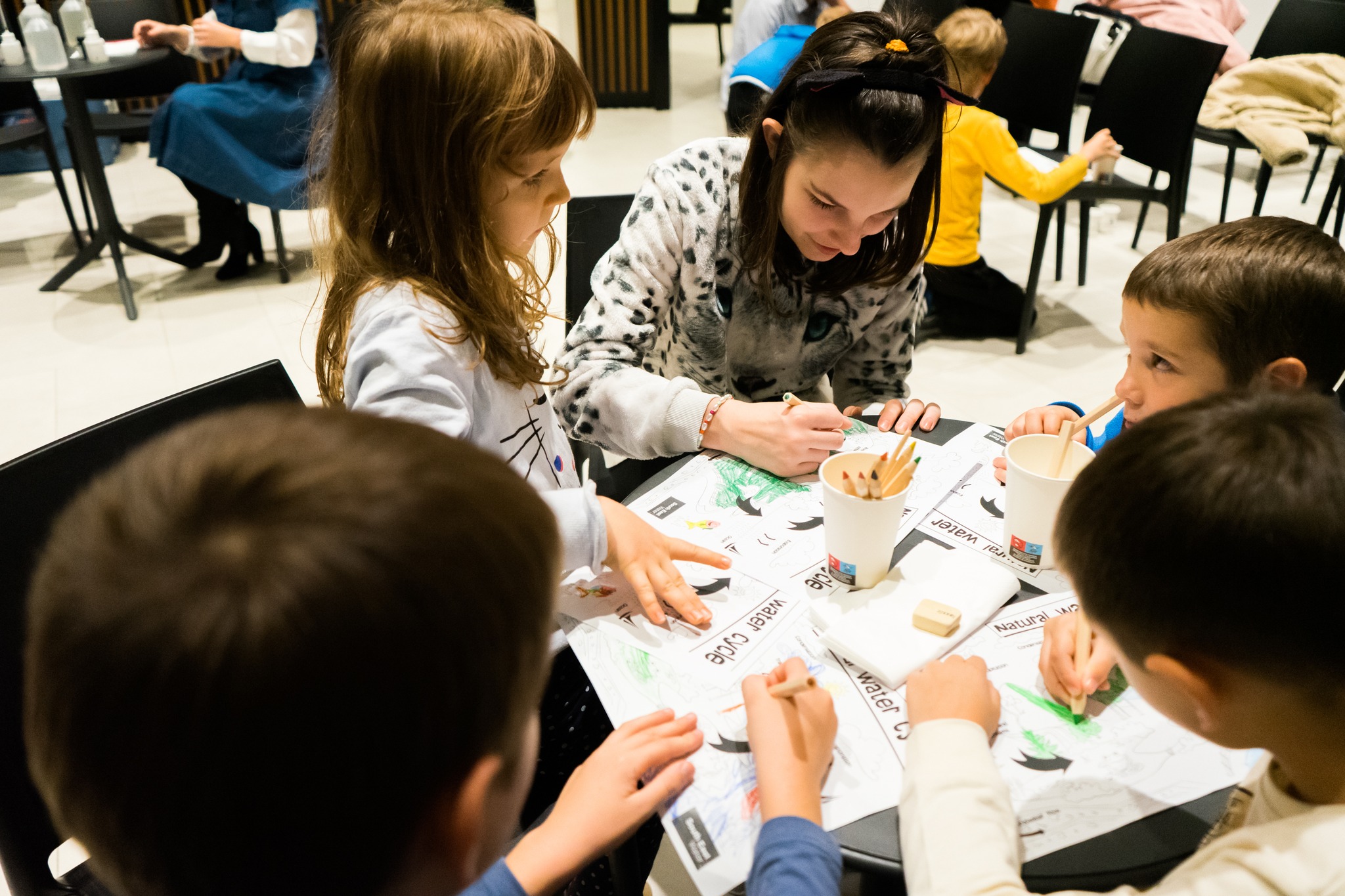
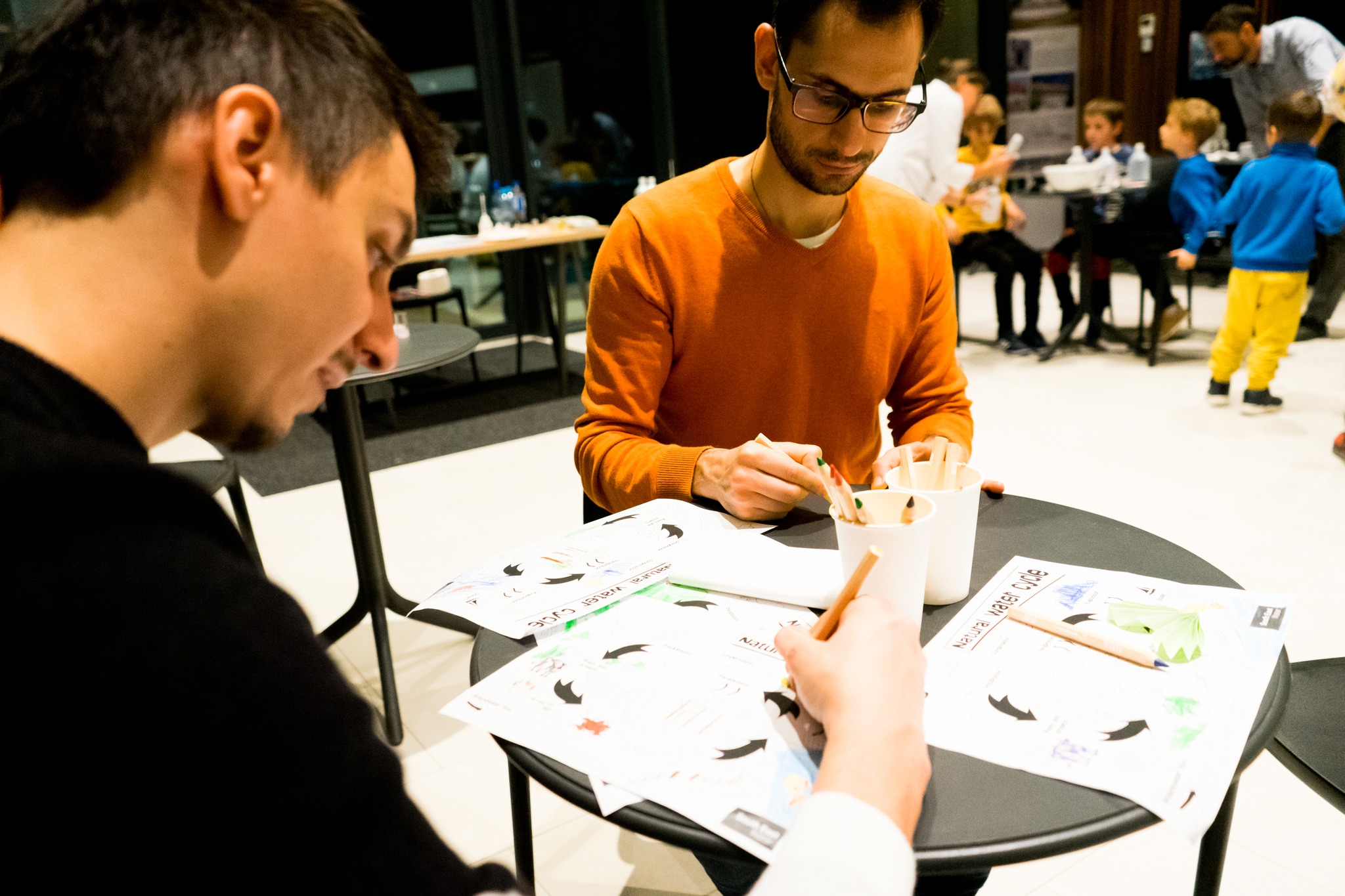
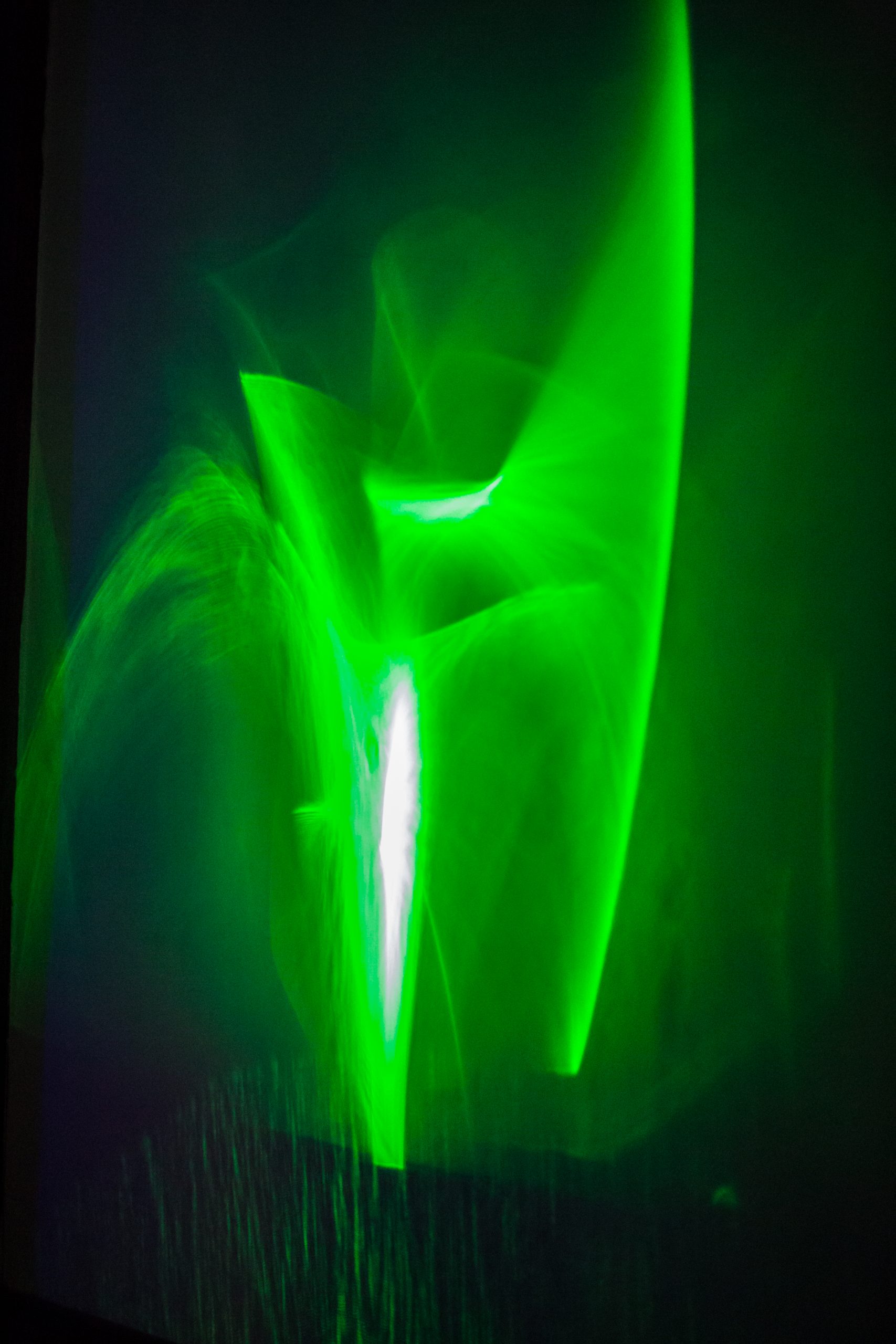
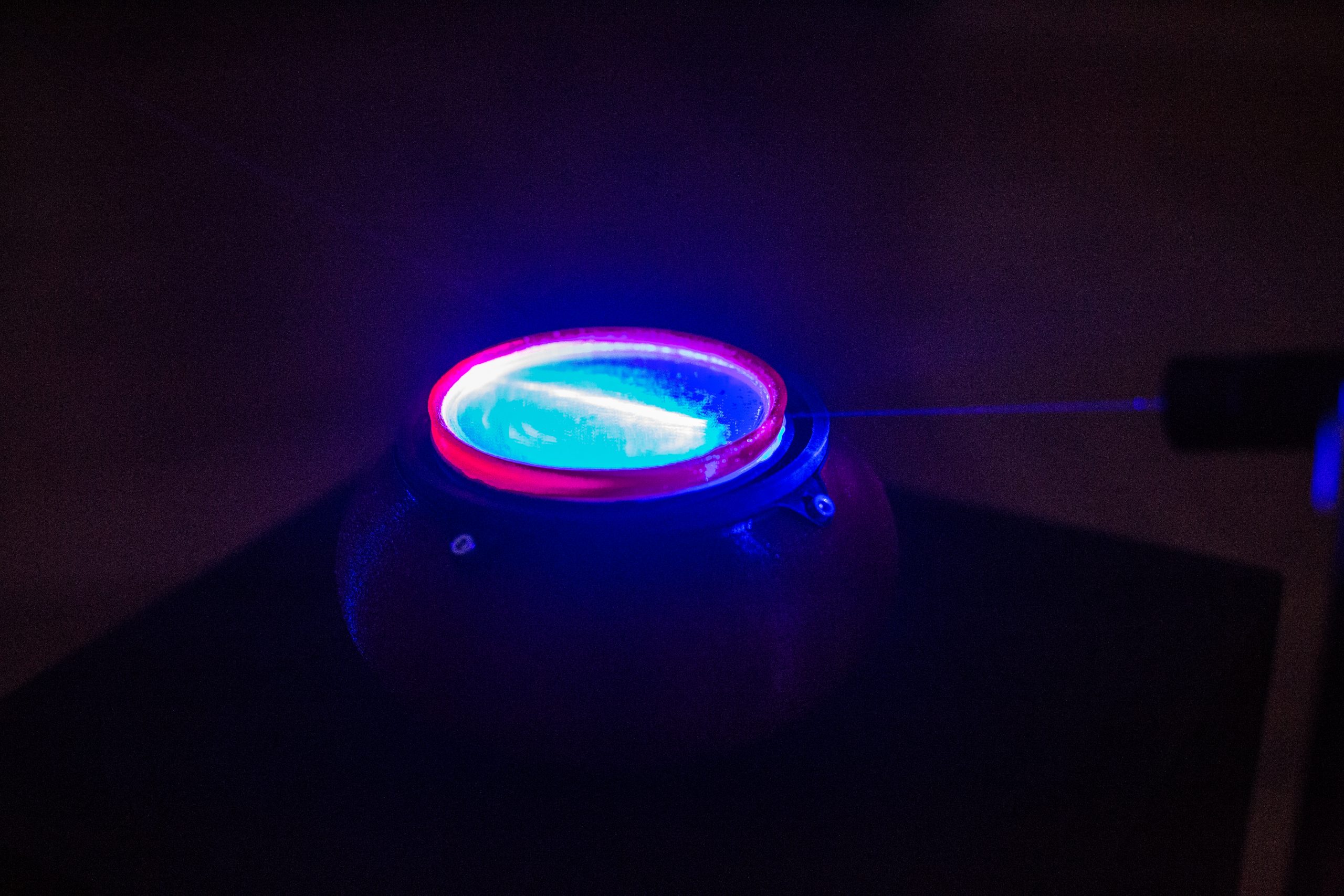
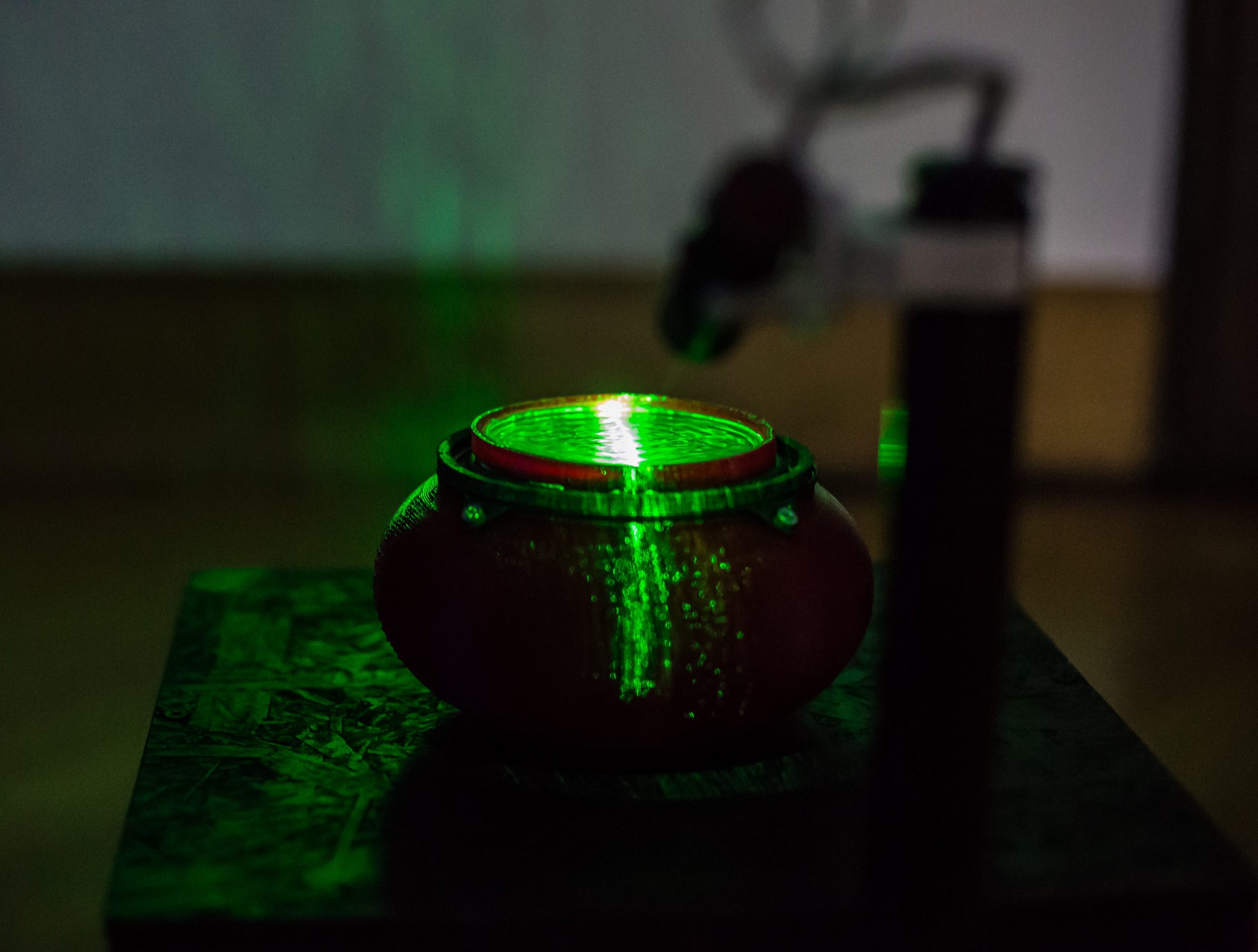
The installation H₂O Transition articulates water as a dynamic system that mediates between perception, materiality, and ecological processes. By staging transformations between liquid, vapor, ice, and reflective surfaces, the work destabilizes the perception of water as a stable resource and repositions it as an active ecological agent.
Here, perception is structured through processes of reflection, refraction, and fragmentation, producing a fluid spatial experience in which the boundaries between body and environment are continuously reconfigured.
Rather than representing hydrological systems, the installation generates conditions in which instability itself becomes a mode of knowledge. Participants encounter water not as an object of observation, but as a relational system that shapes and is shaped by their presence.
4.3 Data and Identity: The Relational Construction of the Self
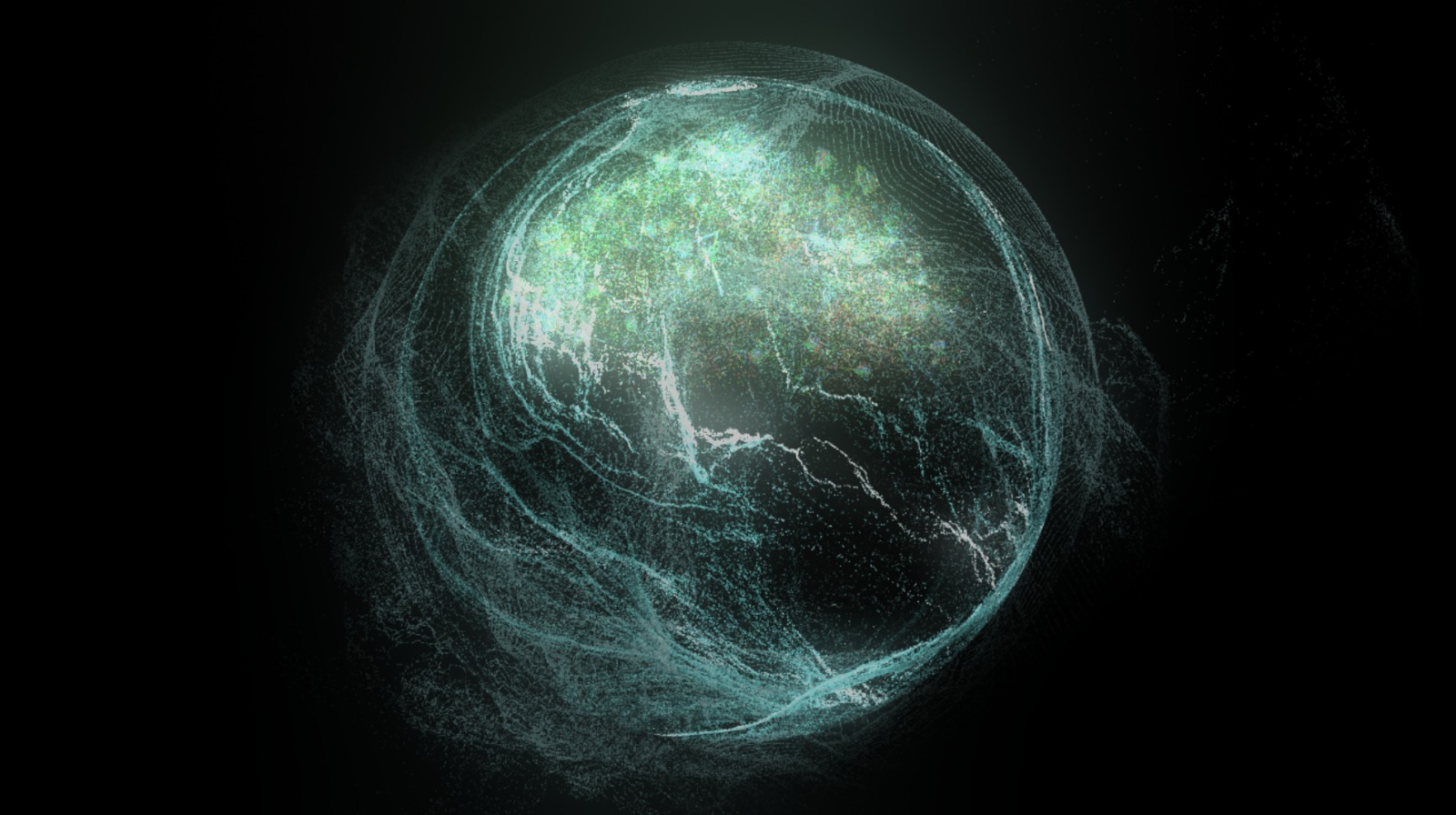
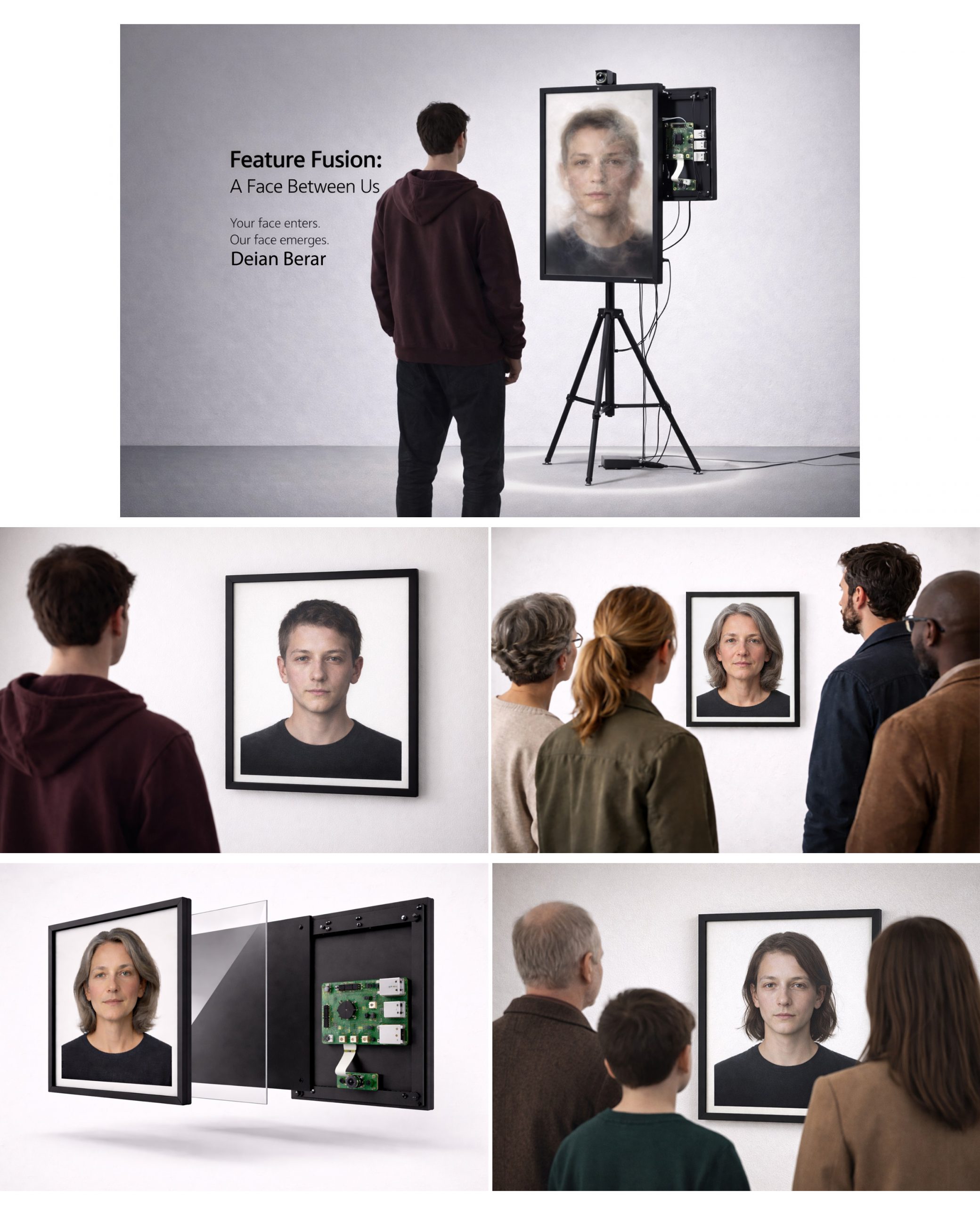
In Feature Fusion, the focus shifts toward computational environments in which identity emerges as a distributed and continuously recomposed process. Through real-time image capture and AI-driven synthesis, the installation generates a collective portrait that dissolves individual boundaries and produces a shared visual entity.
Within this system, data operates as a fluid material that connects multiple bodies across time, transforming identity into a relational construct rather than a fixed attribute.
This work reconfigures machine vision from a tool of surveillance into a space of collective becoming, where human and algorithmic processes co-produce visual and perceptual outcomes. The result is a feedback loop in which participants encounter themselves as part of a larger, evolving system.
4.4 Gesture, Intuition, and Emergent Structures
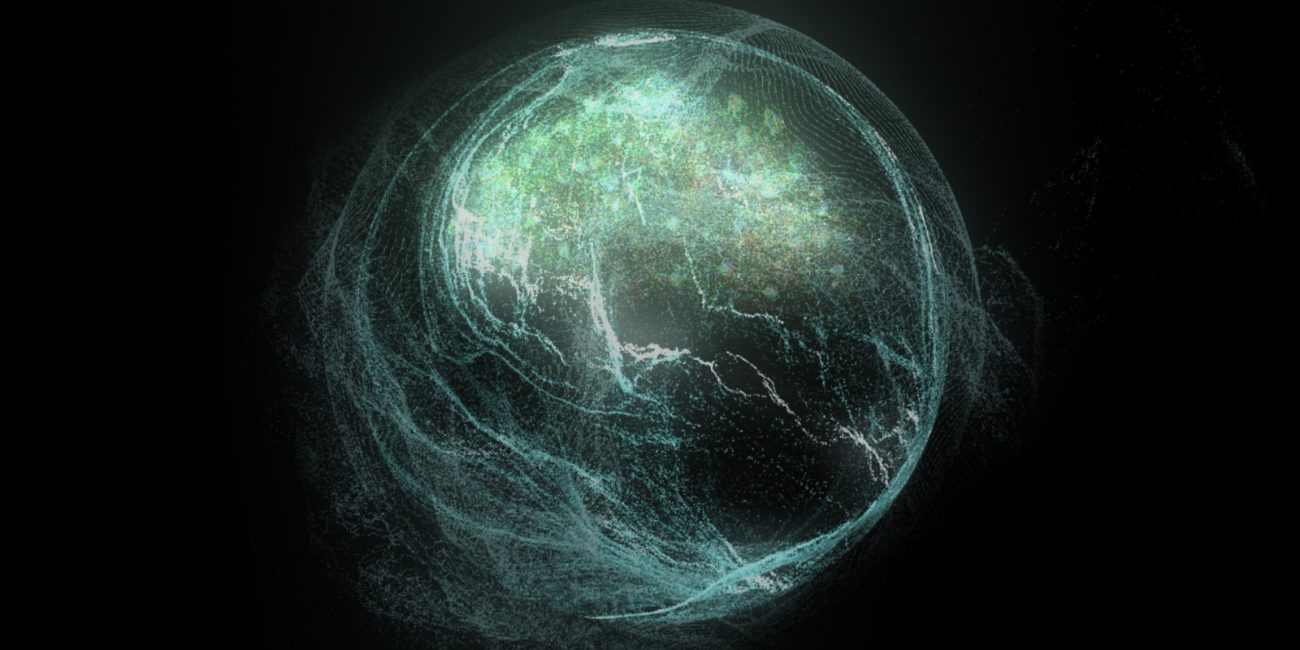
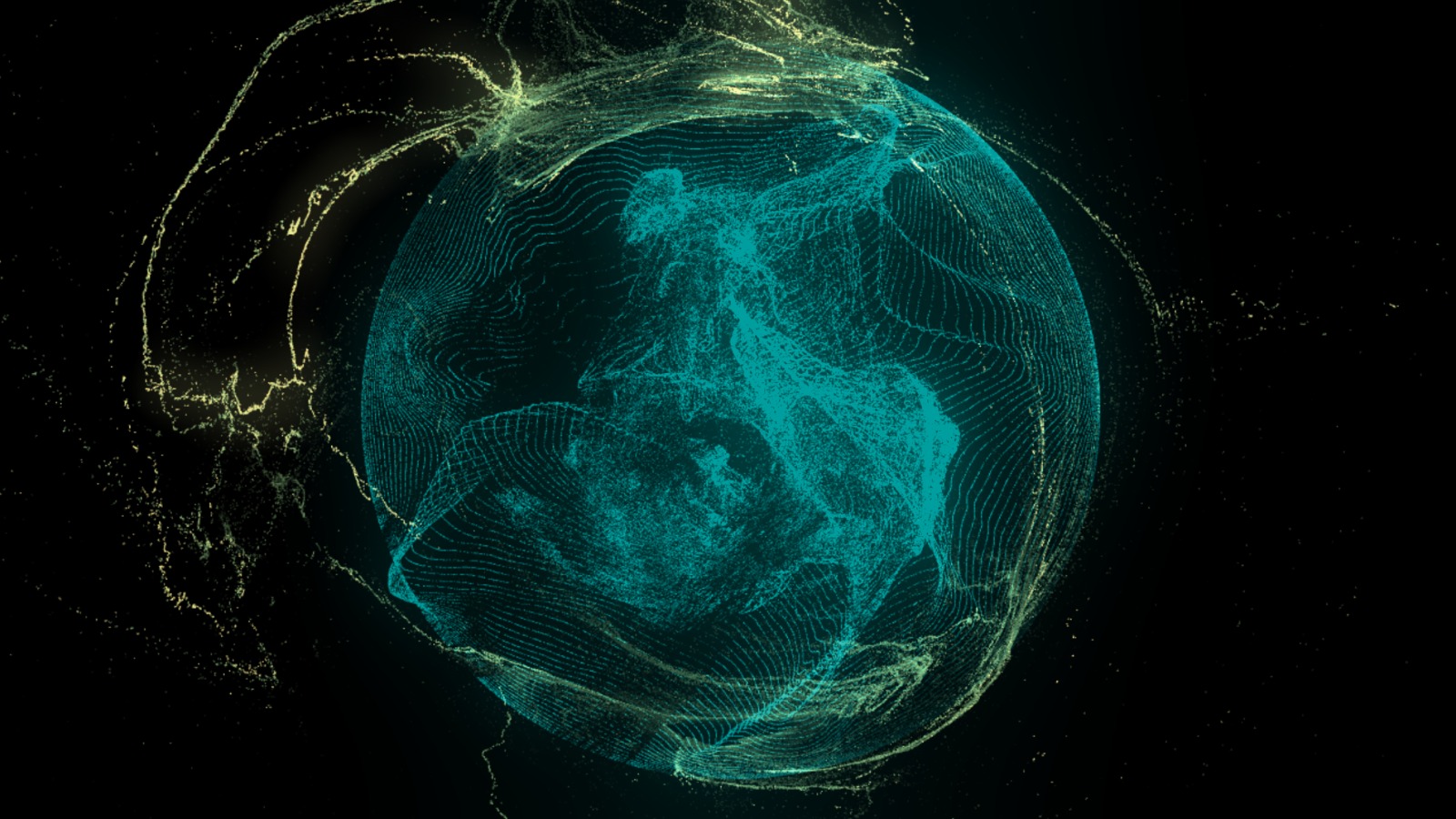
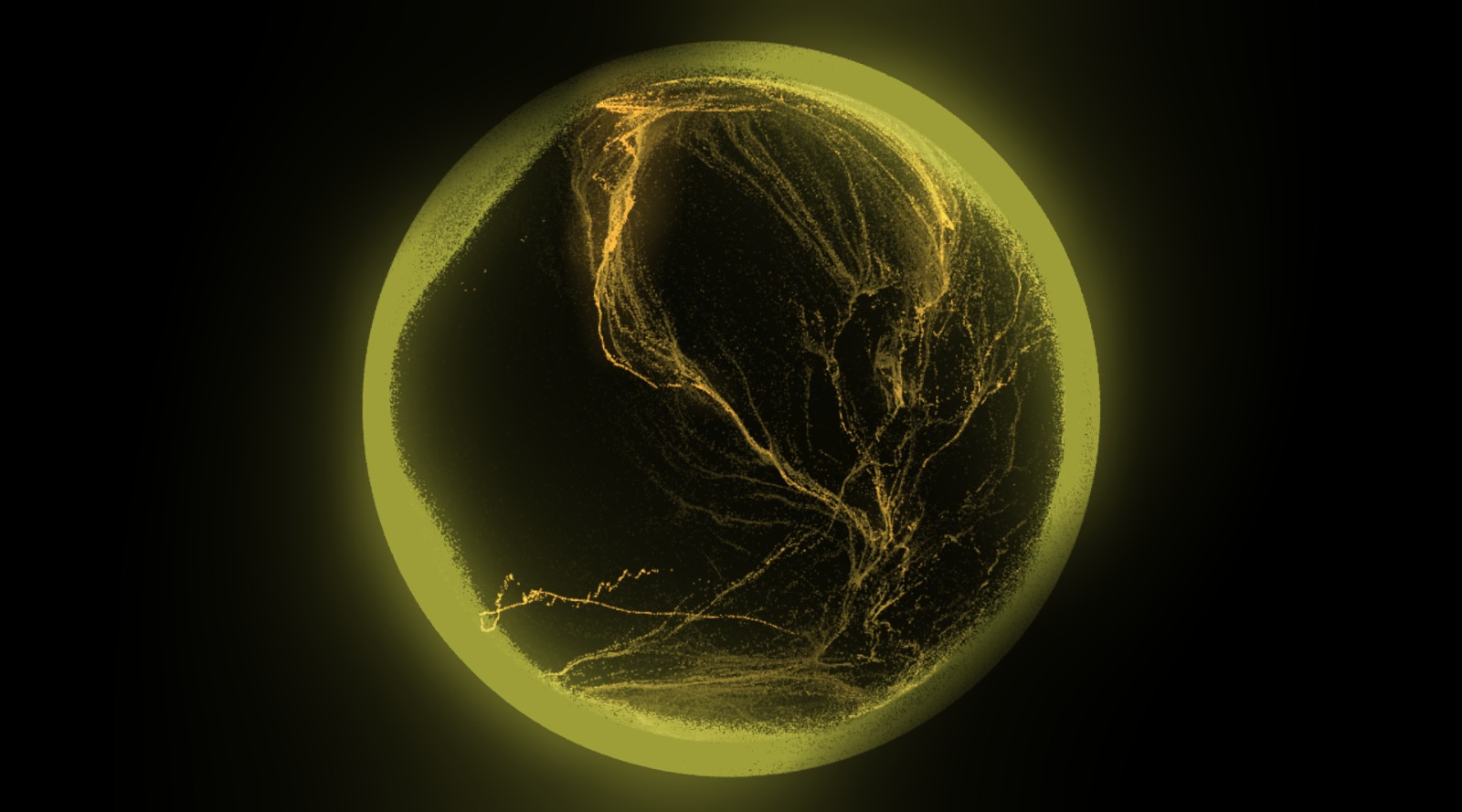
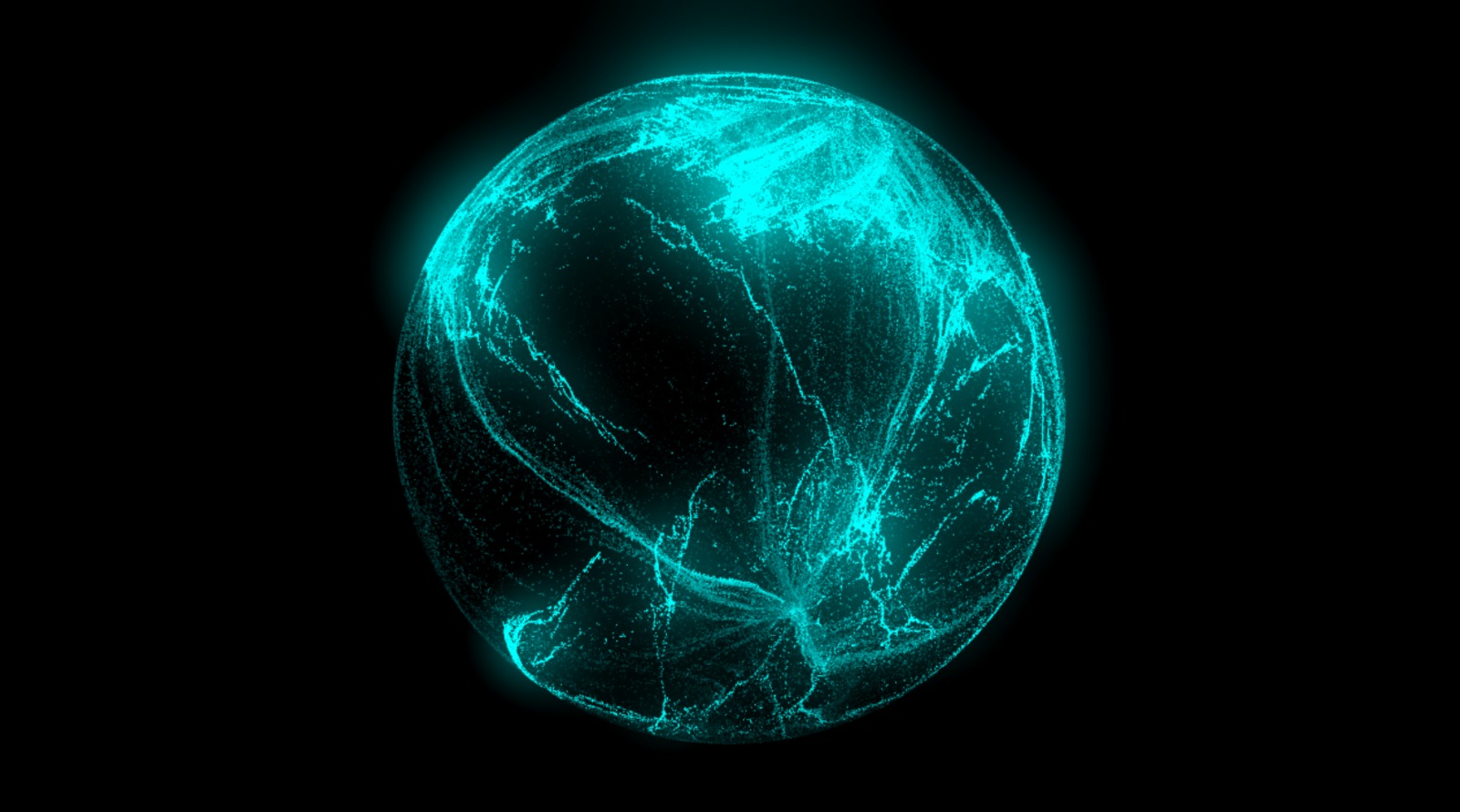
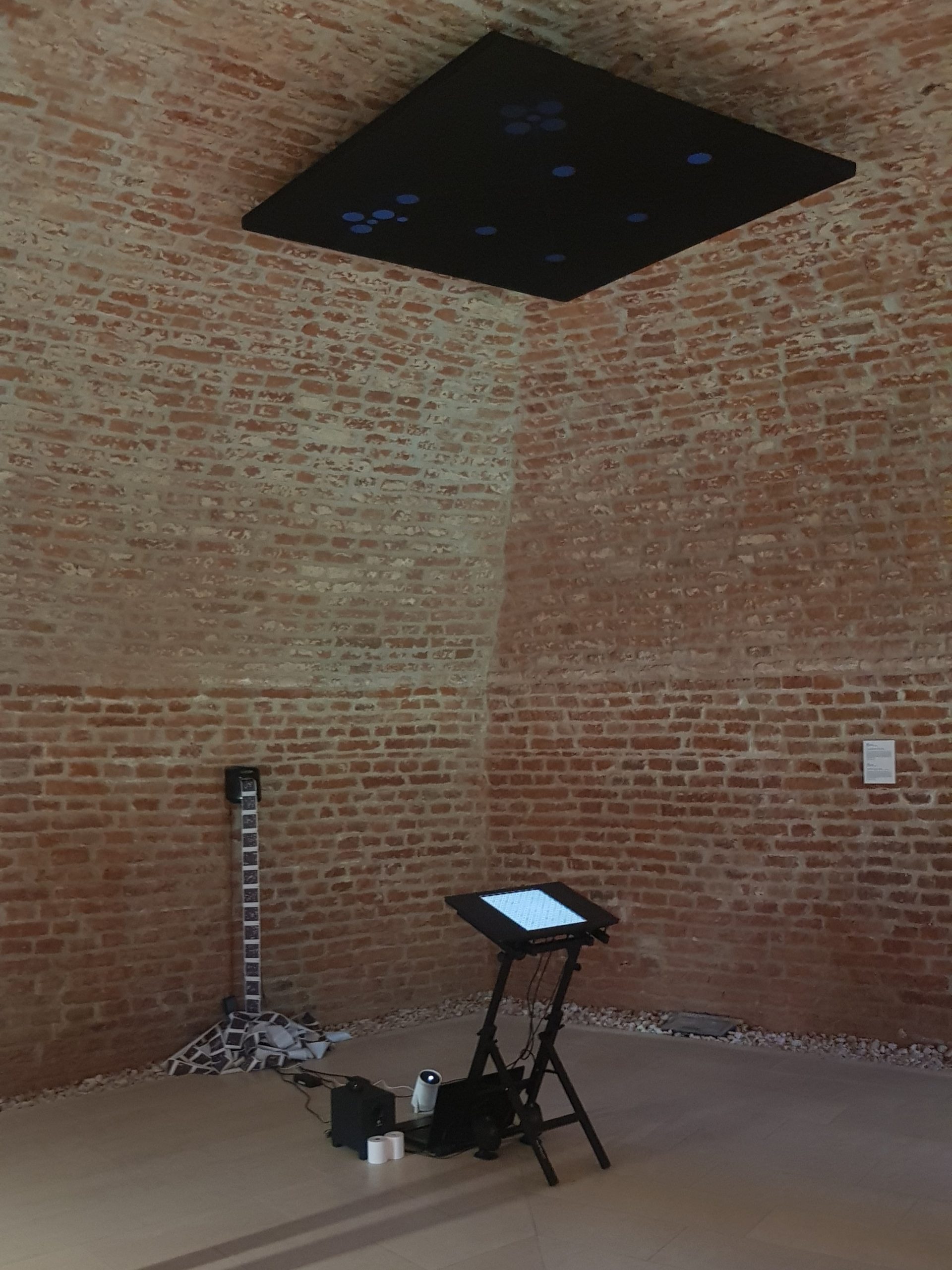
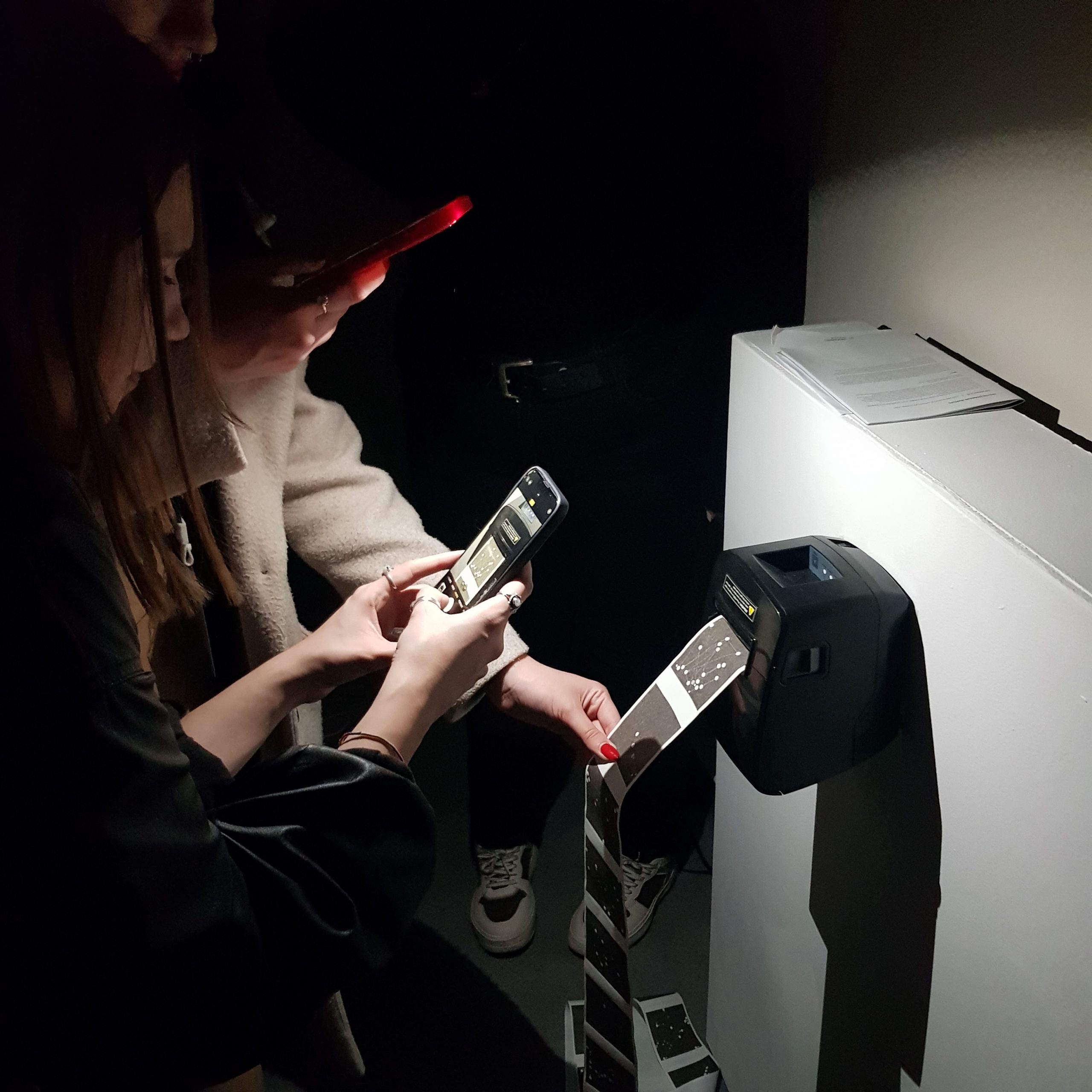
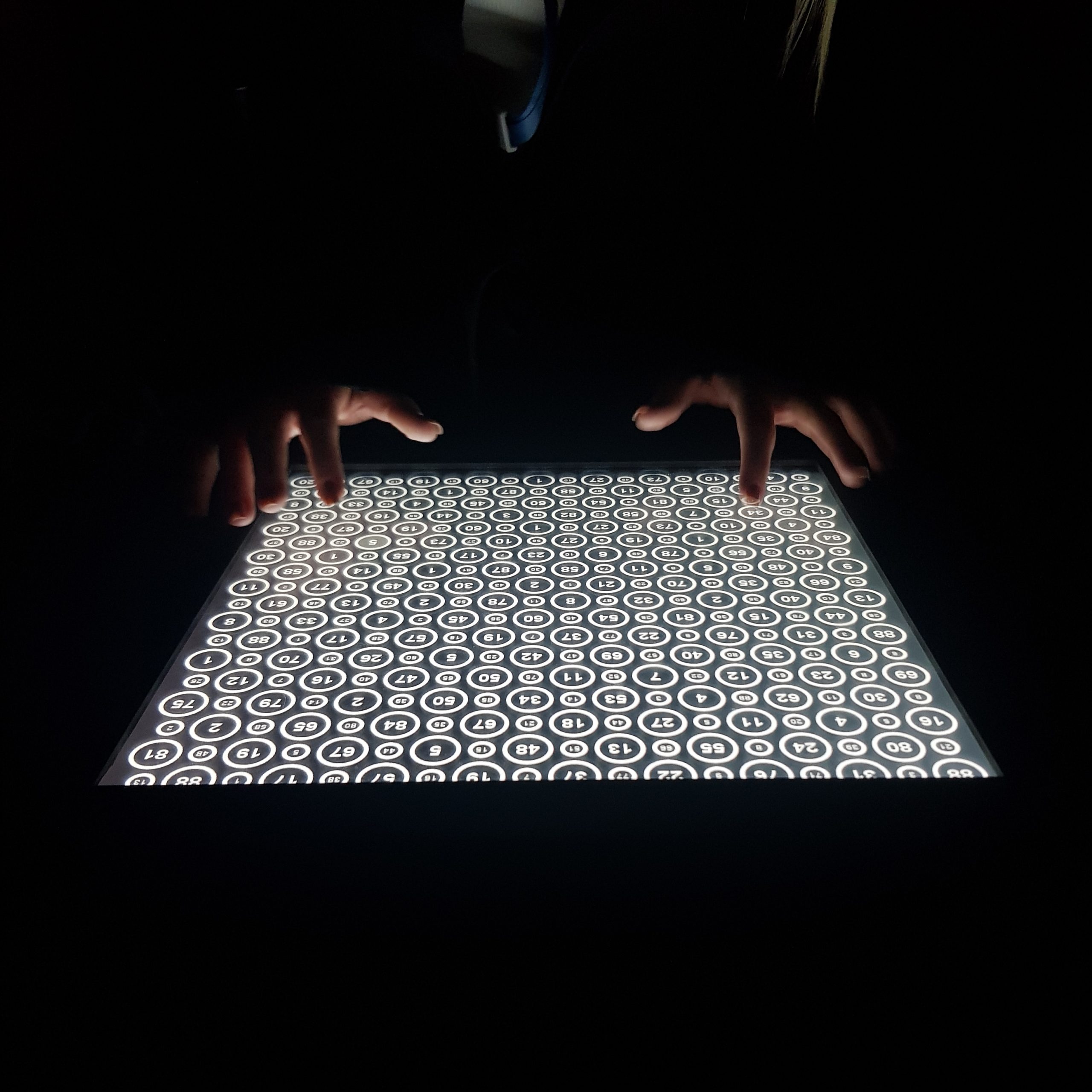
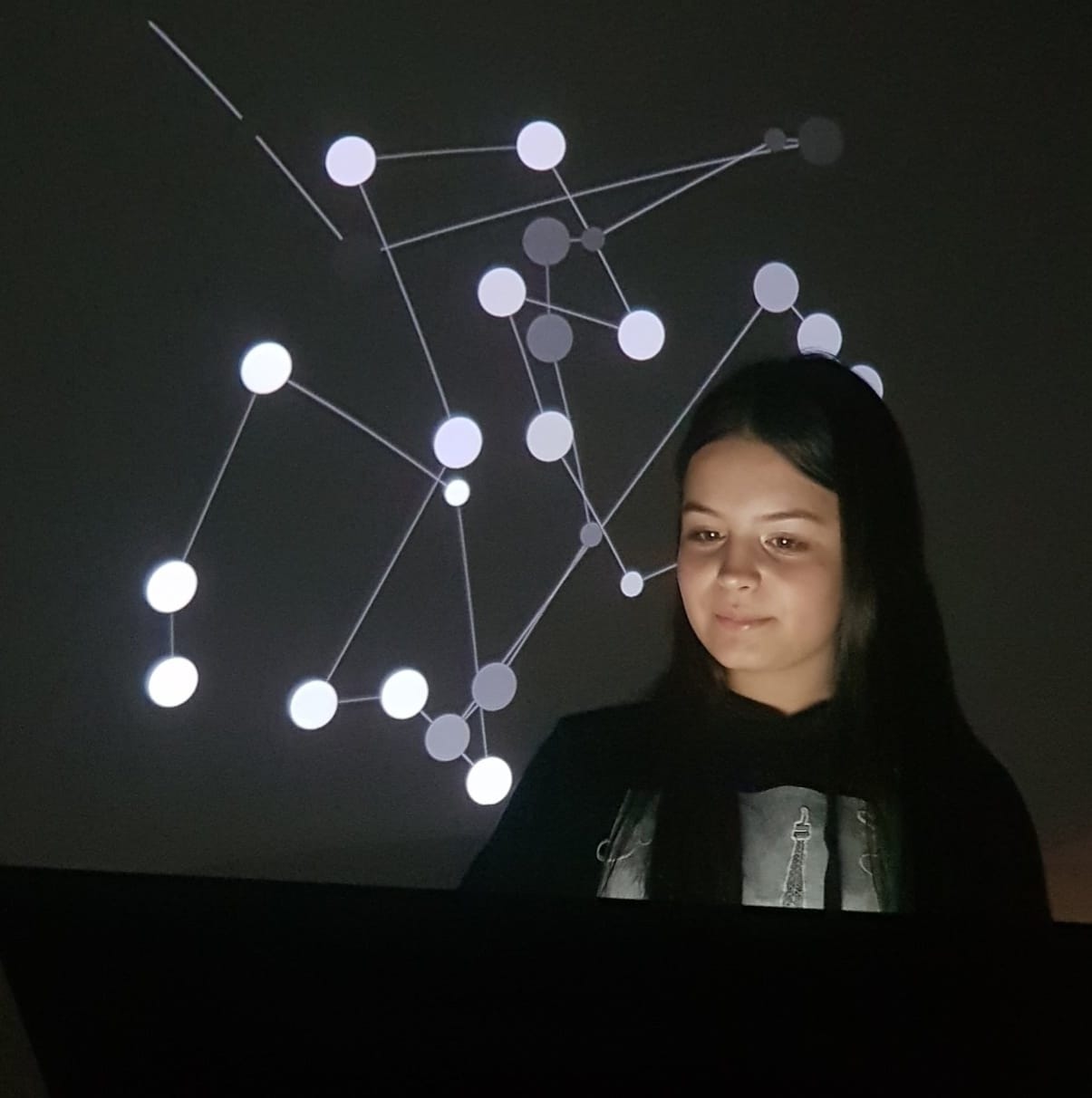
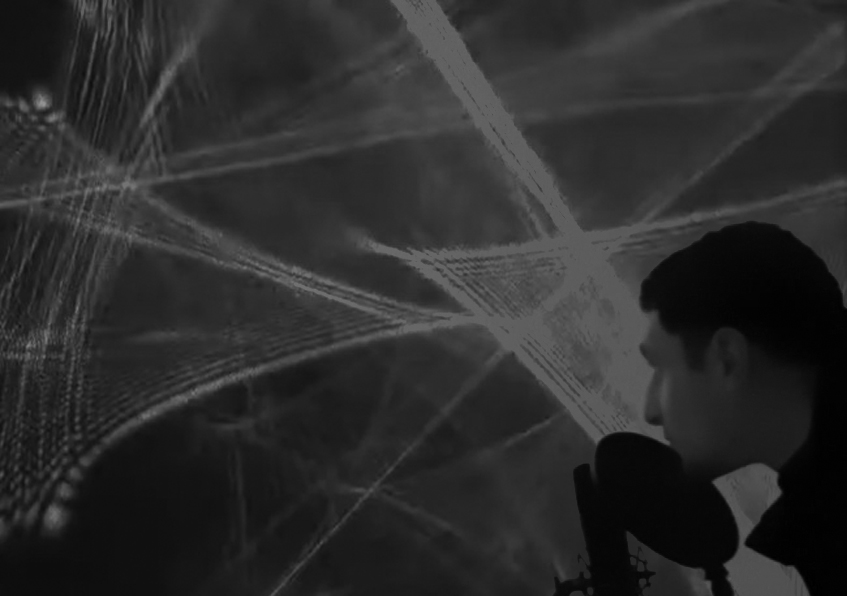
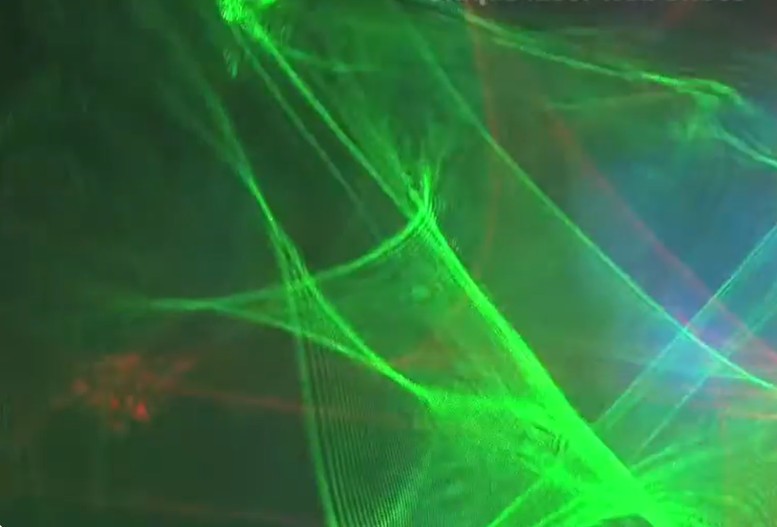
The installation Constellating Intuition explores the translation of bodily gesture into dynamic visual structures. Through real-time tracking, subtle movements generate constellations of light that continuously reorganize into ephemeral formations.
In this context, gesture functions as a generative interface through which internal cognitive processes are externalized and spatialized. Intuition is no longer understood as a private mental event, but as a relational phenomenon emerging through interaction with a responsive system.
The resulting constellations evoke both mnemonic and cosmic structures, linking micro-level bodily actions with macro-level patterns of organization. This establishes a continuity between embodied perception and broader systemic processes.
4.5 Toward a Distributed Ecology of Perception
Taken together, these installations construct a distributed environment in which perception is no longer centered within the individual subject, but unfolds across a network of relations involving bodies, technologies, and environmental conditions.
Across the project, several key transformations can be identified:
- from object → to environment
- from interaction → to immersion
- from representation → to enactment
- from individual perception → to distributed sensing
In this configuration, the exhibition operates as a techno-ecological system in which participants become co-producers of perceptual and spatial conditions. The body is redefined as an ecological interface, simultaneously sensing and being sensed within a field of continuous feedback.
As suggested in the project’s conceptual framework, humanity itself is not treated as a fixed category, but as a condition that emerges relationally through interaction with atmospheric, technological, and material processes.